Oct
Skincare, Trends & Opinions, Wellness
Can Bad Sleep Really Show Up on Your Skin? Here’s What the Research Shows
If you click on links we provide, we may receive compensation.
You know the morning. You slept badly, or barely slept at all, and the face looking back from the bathroom mirror seems flatter and grayer than it did yesterday. The lines around your eyes look deeper. Concealer has more work to do, and it still doesn’t quite do it. Most of us shrug and call it a lack of beauty sleep. I wanted to know whether that tired look really lives in the skin, or mostly in our heads and in the way a tired face moves. The answer turned out to be more useful than the folklore, especially for skin past 50!
Some of what we see after bad sleep is real and measurable. Some of it’s probably expression, lighting, and expectation. The strongest evidence points to the skin barrier and how fast it recovers from everyday damage. Wrinkles get most of the attention, yet they have the weakest support. The barrier piece matters more and more as skin gets older and slower to repair.
Why do we assume sleep and skin are connected?
The idea is old. Grandmothers talked about beauty sleep long before anyone measured transepidermal water loss. And a lot of us are running the experiment every week. Roughly one in three American adults sleeps less than seven hours a night, according to the Centers for Disease Control and Prevention. In the 45 to 64 age group, that number climbs to 39 percent, the highest of any age bracket the CDC tracks. Source: https://www.cdc.gov/sleep/data-research/facts-stats/adults-sleep-facts-and-stats.html. A week of short nights and the face in the mirror looks flat, puffy, and gray. A long weekend of rest and it looks like someone turned the lights back on. That feels like proof, but it isn’t quite.
Our own judgment is a poor instrument here. When you know you slept badly, you look for evidence of it. You notice the shadows under your eyes because you expect them. You also tend to carry fatigue in your face, in heavier lids and a slacker mouth, and that reads as “older” even when the skin itself hasn’t changed. So before blaming collagen, it helps to separate what other people see from what the skin is doing. Researchers have tried to do exactly that, and the results don’t all point the same direction.
What happens when researchers photograph tired faces?
The best-known work comes from the Karolinska Institute in Sweden. In a 2010 study published in The BMJ, researchers photographed people after a normal night of sleep and again after a night of sleep deprivation, then asked untrained observers to rate the photos. The sleep-deprived faces were rated as less healthy and less attractive. Source: https://pmc.ncbi.nlm.nih.gov/articles/PMC3001961/. A follow-up published in the journal Sleep in 2013 tried to pin down which features gave people away. It was small, with only 10 people photographed and 40 observers rating the images.
In that second study, the sleep-deprived faces were rated as having more swollen eyes, darker under-eye circles, paler skin, more fine lines, and droopier corners of the mouth. Source: https://pmc.ncbi.nlm.nih.gov/articles/PMC3738045/. Notice the word “rated,” though. These were human judgments, not instrument readings. And the sleep loss involved was extreme, a five-hour night followed by 31 straight hours awake. That’s a lot harsher than the typical work week most readers are dealing with.
A larger study complicates the picture. Another study from the same research circle, published in the Journal of Sleep Research, randomized 181 people to either a full night of sleep or a night of total sleep deprivation. This time they used objective measures, including spectrophotometry for skin color and measurements of eye openness and periorbital darkness. They found that sleep deprivation wasn’t related to differences in any of those facial variables. Source: https://research-portal.st-andrews.ac.uk/en/publications/the-effect-of-sleep-deprivation-on-objective-and-subjective-measu/. So one bad night may change how you’re perceived more than it changes your skin. That’s a useful thing to know before buying an eye cream to fix a single all-nighter.
Does poor sleep change how skin works?
This is where the stronger case lives. A study published in Clinical and Experimental Dermatology in 2015 looked at 60 healthy women between 30 and 49. Half were chronic poor sleepers, averaging five hours or less, and half were good sleepers getting seven to nine hours. Good sleepers scored lower on a clinical measure of intrinsic skin aging. And when researchers lightly disrupted the skin barrier with tape stripping, the good sleepers showed 30 percent greater barrier recovery after 72 hours. Source: https://academic.oup.com/ced/article/40/1/17/6621145.
That same study exposed small patches of skin to simulated UV light. Good sleepers recovered from the redness significantly faster at the 24-hour mark. Poor sleepers also reported lower satisfaction with their own appearance. Taken together, that paints a picture of skin that repairs more slowly when sleep is chronically short. And slower repair, repeated every day for years, is a plausible route to the dryness and uneven tone people associate with aging.
Advertisement
But I don’t want to oversell it. The study was funded by Estée Lauder, which has an obvious interest in the topic. It was small and observational, meaning it compared two groups rather than changing anyone’s sleep. And the two groups differed in other ways. Coverage of the results noted that 44 percent of the poor sleepers were obese, compared with 23 percent of the good sleepers. Source: https://sleepreviewmag.com/sleep-health/parameters/quality/sleep-deprivation-and-skin-aging-linked/. Weight, stress, diet, and health all travel with sleep, so the study shows a link, not a clean cause.
Where does cortisol fit into the story?
Cortisol gets blamed for almost everything in wellness writing, so it’s worth being careful. The cleanest experiment on sleep and barrier function comes from a 2001 study in the Journal of Investigative Dermatology. Researchers tested three kinds of stress on healthy women: a tough interview, one night without sleep, and a multi-day exercise program. One night of sleep deprivation slowed barrier recovery after tape stripping, while the exercise didn’t affect it. Source: https://doi.org/10.1046/j.1523-1747.2001.01373.x.
What’s interesting is what rose in the blood. The interview stress raised cortisol. The sleep deprivation group showed increases in inflammatory signals, including interleukin-1 beta and tumor necrosis factor alpha. So in that experiment, the measured link between lost sleep and a weaker barrier ran through inflammation more clearly than through cortisol. Both are part of the body’s stress response, and they overlap. But if you read a claim that a bad night “spikes cortisol and destroys your collagen,” that’s a bigger leap than the data supports.
There is a real reason cortisol comes up. Glucocorticoids, the hormone family cortisol belongs to, are known to interfere with the skin’s barrier. A study in the Journal of Investigative Dermatology found that just three days of a potent topical steroid delayed barrier recovery and weakened the outer layer of skin by shutting down production of barrier lipids. Applying a balanced mix of ceramides, cholesterol, and fatty acids corrected those problems. Source: https://pubmed.ncbi.nlm.nih.gov/12603860/. That’s a strong prescription steroid, not your own cortisol after a short night. Still, it shows how sensitive barrier lipids are to stress hormones, and it hints at which ingredients help when the barrier is under pressure.
Why do dark circles and puffiness get worse after a short night?
Under-eye skin is some of the thinnest on the body. Blood vessels and pooled fluid show through it more easily than anywhere else on the face. When you lie flat, fluid can settle around the eyes overnight, and salt or alcohol the evening before makes that worse. A short, broken night doesn’t give that fluid much time to redistribute once you’re upright. So the morning-after puffiness is real, but it’s usually temporary.
Dark circles are messier. Some are caused by pigment, which is genetic and doesn’t change much with rest. Some come from hollowing under the eye, which casts a shadow and deepens with age as fat pads shift. And some come from visible blood vessels, which can look darker when skin is pale or tired. Better sleep tends to help the vascular and puffy kind. It won’t do much for inherited pigment or structural hollows, and no eye cream will either, honestly.
Why does sleep matter more for mature skin?

This is the part I think matters most for BeautyWonks readers. After menopause, skin is already working with less. Estrogen decline reduces oil production, ceramide levels drop, and barrier repair slows down even with perfect sleep. If poor sleep slows repair further, the two effects stack. Skin that was already losing water faster now has less time and fewer resources to rebuild.
And sleep problems are common in exactly this window. A meta-analysis pooling studies from around the world estimated that about 51.6 percent of postmenopausal women experience sleep disorders. Source: https://pmc.ncbi.nlm.nih.gov/articles/PMC9996569/. Hot flashes and night sweats wake people up. Sweat sitting on the skin, followed by a quick cool-down, can leave the face feeling tight and irritated by morning. Many women in their 50s, 60s, and 70s describe skin that feels more reactive during stretches of bad sleep, and the research above gives a reasonable explanation for why.
There’s a practical takeaway here. If your skin seems to have turned sensitive at the same time your sleep fell apart, the two may be connected. Before adding another active ingredient to “fix” dullness, it’s worth asking whether your barrier is simply tired and underslept. Stacking retinoids and acids on skin that isn’t recovering well tends to make things worse, not better. In this stage of life, protecting recovery time is part of the routine.
Can skincare make up for lost sleep?
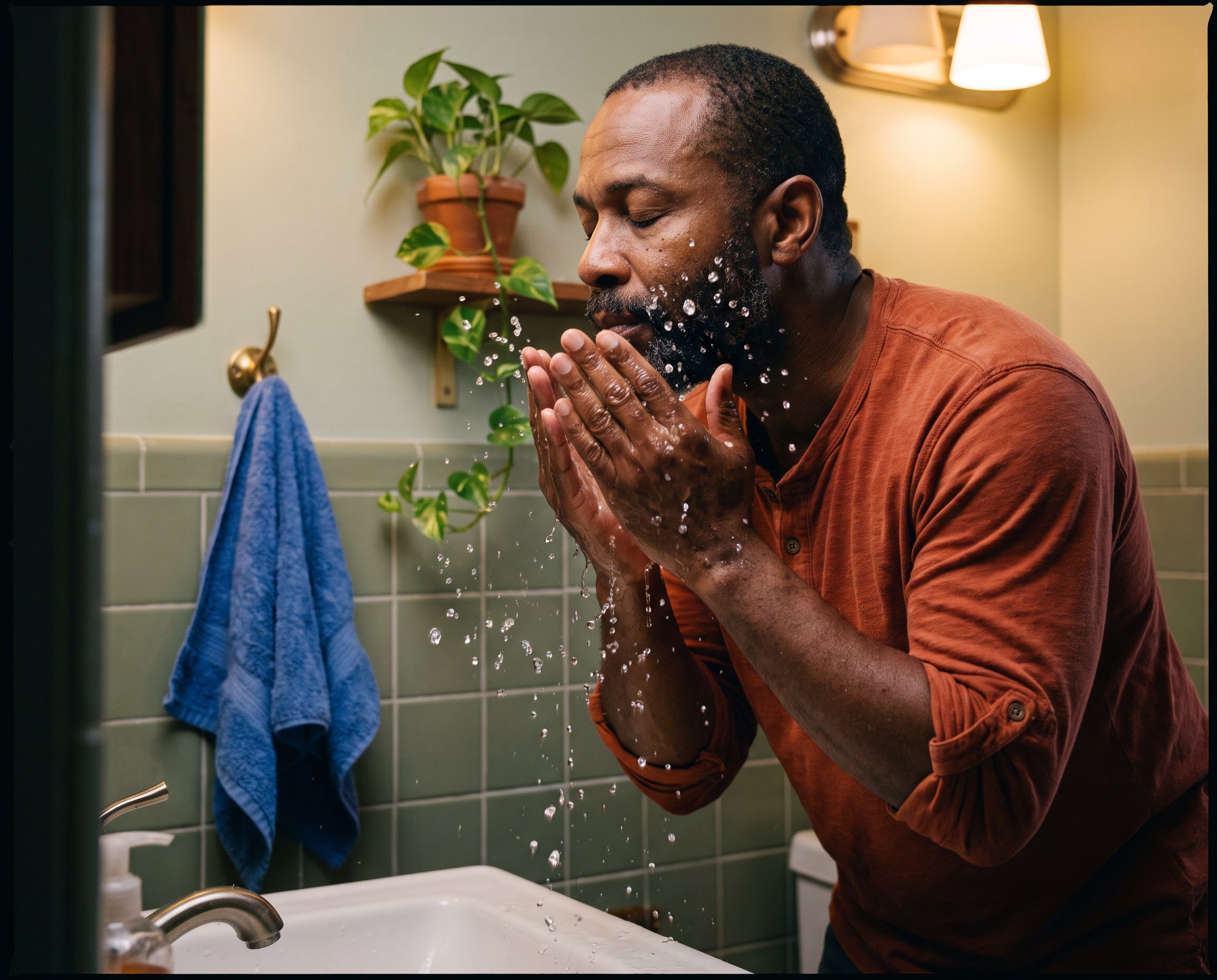
No. I wish the answer were different! There’s no cream that replaces the repair work your body does when it’s at rest. The “overnight” label on a product describes when you apply it, not what it can substitute for. A rich night cream on a five-hour night is still a five-hour night.
What skincare can do is lower the burden on skin that’s recovering slowly. A gentle, non-foaming cleanser removes the day without stripping what’s left of the barrier. A moisturizer with ceramides, cholesterol, and fatty acids gives skin the same lipids that research uses to correct stress-related barrier damage. Humectants like glycerin and hyaluronic acid help, as long as something richer sits on top to hold the water in. And on nights when you’re exhausted, skip the strong exfoliant or retinoid and let the skin rest. Morning sunscreen matters too, since the 2015 study found poor sleepers recovered more slowly from UV redness.
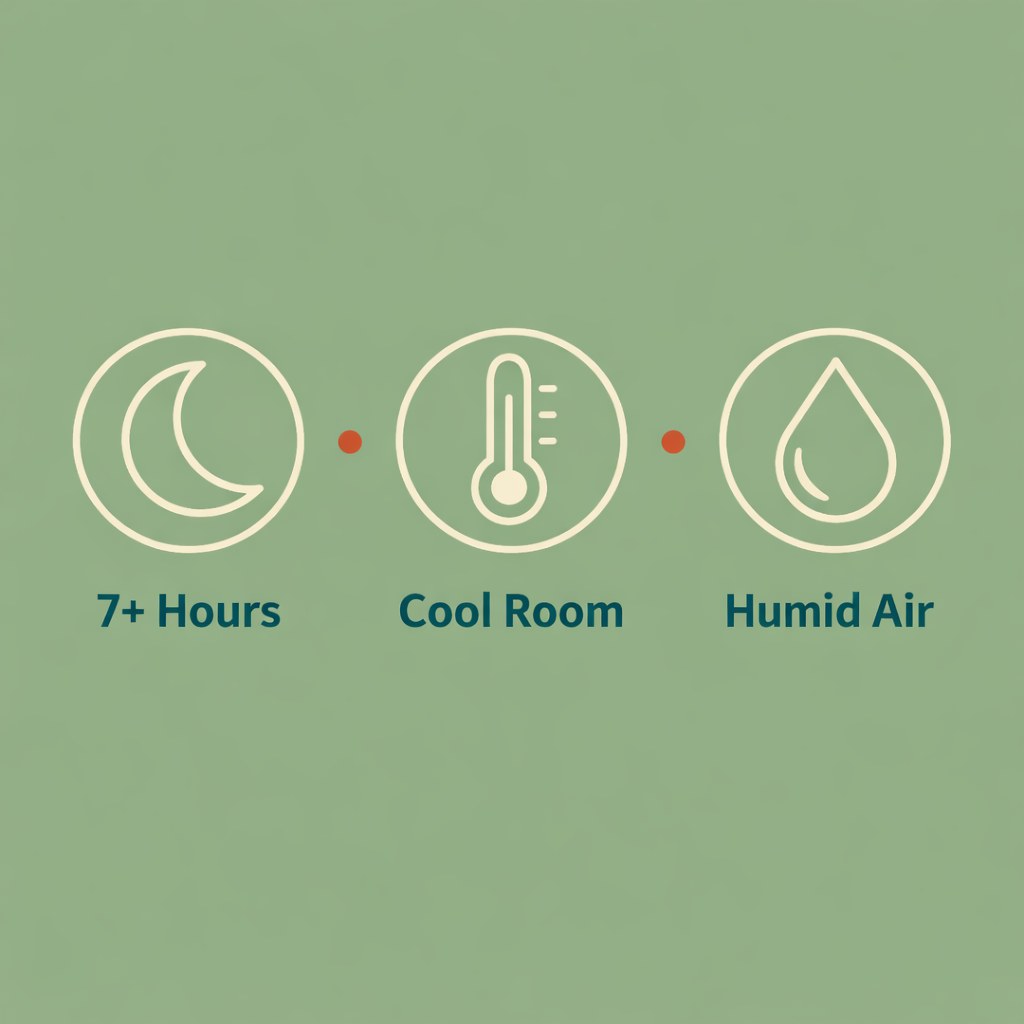
A humidifier in the bedroom is one of the most underrated tools for dry, mature skin. Heated winter air pulls moisture from the skin for eight hours straight. Adding moisture to the room supports the barrier while you sleep, however long that sleep turns out to be. A soft pillowcase can reduce friction and creasing on fragile skin. These are small things, but they work in the same direction as everything else.
What helps you sleep better?
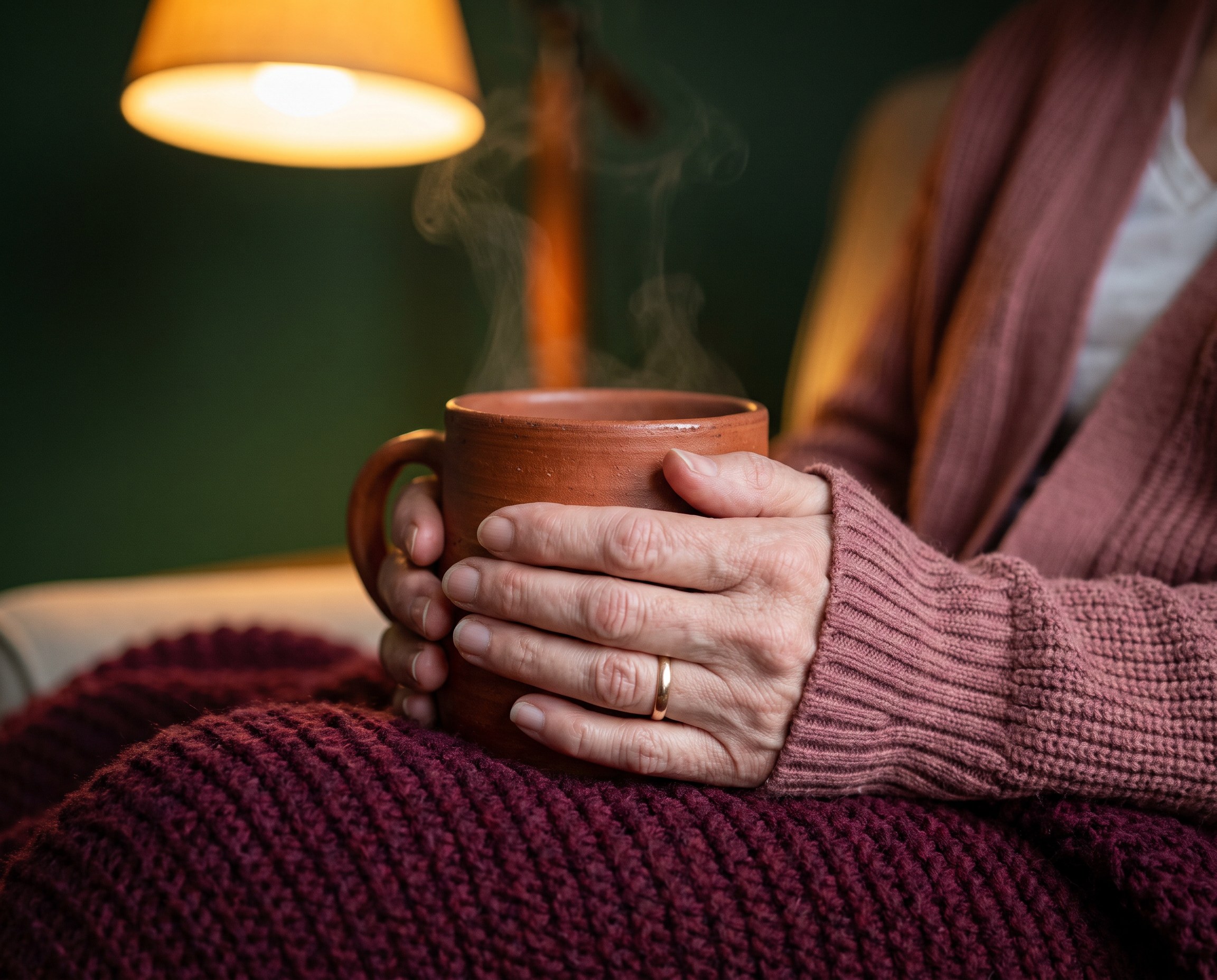
The basics are boring, and they work better than most supplements. Going to bed and waking at roughly the same time every day, weekends included, steadies the body clock. A cool, dark room helps, especially for anyone dealing with night sweats. Caffeine has a long half-life, so an afternoon coffee can still be in your system at bedtime. Alcohol makes it easier to fall asleep but tends to break up sleep later in the night.
Screens are worth a mention without the usual lecture. Bright light late in the evening can push your sleep later, so dimming lights and setting the phone aside for the last stretch of the night is reasonable. But the bigger issue for many people is that the phone keeps the brain engaged. Reading something calm on paper or simply sitting with a dim lamp can help the mind wind down. Find what works and stick with it.
If poor sleep has lasted for months, it’s worth talking to a doctor. Loud snoring, gasping, or waking unrefreshed after a full night can point to sleep apnea, which is underdiagnosed in women. Chronic insomnia also responds well to cognitive behavioral therapy designed for sleep, which many doctors recommend before medication. And if menopause symptoms are driving the wake-ups, there are treatment options worth discussing. Fixing the sleep problem will do more for your skin than any product on the shelf.
FAQs
Will one bad night age my skin?
Probably not in any lasting way. The best objective study on single nights of sleep loss found no measurable changes in skin color or under-eye darkness. You may look more tired, mostly through expression and puffiness, but that fades with rest. The concern is chronic short sleep over months and years, where barrier recovery appears to slow. One rough night is a reason to be gentle with your skin the next day, not a reason to panic.
How many hours of sleep does skin need?
There’s no skin-specific number. The CDC recommends at least seven hours a night for adults, and the 2015 skin study defined good sleepers as getting seven to nine hours. Poor sleepers in that study were getting five hours or less. Quality matters too, since broken sleep from hot flashes or snoring can leave you short even when time in bed looks fine. If you wake up tired after a full night, that’s worth mentioning to your doctor.
Does sleeping on my side cause wrinkles?
Pressing the face into a pillow for hours can create creases, sometimes called sleep lines. On younger skin they disappear by mid-morning. On thinner, older skin they can linger longer and may deepen over many years. Sleeping on your back or using a smooth pillowcase can reduce the pressure, but comfort and real rest matter more than position. Don’t trade a good night’s sleep for a position you can’t settle into.
Are overnight masks or sleeping packs worth it?
They can be, as a final seal on dry skin. Most are simply thicker moisturizers designed to reduce water loss through the night. That’s helpful for mature or barrier-damaged skin, especially in winter. But they don’t create the repair benefits of sleep, so think of them as moisture support rather than a fix for short nights. A good ceramide moisturizer applied a little more generously can do much the same job.
How long does it take for skin to look better once sleep improves?
Puffiness and that gray, flat look often improve within a few days of better rest. Barrier recovery takes longer, since the outer layer of skin turns over in a matter of weeks. Changes in fine lines or firmness, if they come at all, would take months. There isn’t solid research on exact timelines, so be wary of anyone who promises one. Give it a month of steady sleep before you judge the results.
Sleep and skin are connected, just not in the dramatic way the beauty aisle likes to suggest. The evidence is strongest for barrier recovery, the quiet daily repair that keeps skin comfortable and resilient. It’s weakest for the idea that a single bad night carves in new wrinkles. For skin past 50, protecting sleep belongs in the routine right next to sunscreen and a good moisturizer. Rest won’t turn back the clock. But it gives your skin the time it needs to do its own work.
Related Posts