Oct
If you click on links we provide, we may receive compensation.
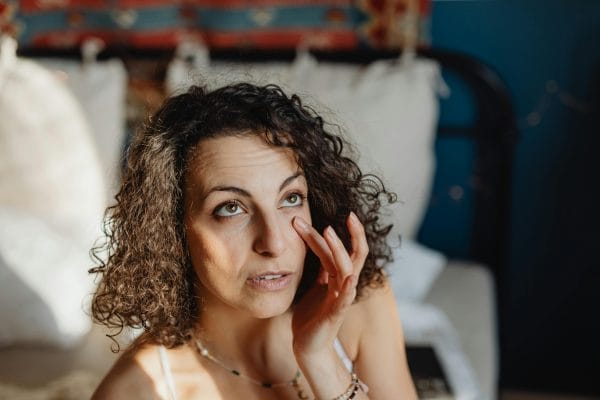
You’ve probably had this moment. You come in from a cold walk, or you finish a glass of wine at dinner, and your cheeks go pink. Then they stay pink a little longer than they used to. Maybe a new serum stings when you put it on, so you blame the serum, toss it, and tell yourself you just have sensitive skin. It’s an easy label, and plenty of us have worn it for years without a second thought. Sometimes it’s the right one. But sometimes the redness is trying to tell you something more specific, and that’s worth finding out.
I want to be clear about what this article can and can’t do. It can’t tell you whether you have rosacea, and nothing you read online can. What it can do is help you notice the patterns that matter, so you walk into a dermatologist’s office with good questions and a clear picture of what your skin has been doing. That matters because the two conditions call for different care. Treat rosacea like ordinary sensitivity and you may spend years switching moisturizers while the real problem keeps building. Treat simple sensitivity like a disease and you might reach for treatments you never needed.
What’s the difference between sensitive skin and rosacea?
Sensitive skin is mostly about how your skin feels. A special interest group of the International Forum for the Study of Itch defines it as a syndrome of unpleasant sensations – stinging, burning, pain, itching or tingling – in response to things that normally shouldn’t cause them. The skin can look completely normal, or it can look a little red. The important part of that definition is that these sensations can’t be explained by a skin disease. It’s also very common. A 2019 review in Frontiers in Medicine found that roughly 60 to 70 percent of women and 50 to 60 percent of men report some degree of sensitive skin (https://www.frontiersin.org/journals/medicine/articles/10.3389/fmed.2019.00098/full).
Rosacea is a chronic inflammatory skin condition, and it’s defined more by what you can see. An international panel of dermatologists has moved away from the old subtypes and toward what it calls a phenotype approach. Under that approach, two signs are enough on their own to point toward rosacea: persistent redness across the center of the face that flares from time to time, and thickening of the skin, most often on the nose (https://mdedge.com/content/experts-outline-phenotype-approach-rosacea). Other signs include flushing, small visible blood vessels, red bumps and pus-filled spots, and eye symptoms. None of those alone makes the diagnosis, but together they build a picture. That’s a job for a trained eye, not a quiz.
Here’s where it gets confusing. People with rosacea very often have sensitive skin too. Their skin stings, burns and reacts to products, which is exactly what sensitive skin feels like. So the feeling alone won’t separate the two. The more useful question is what happens to the color of your skin over time. Redness that comes and goes within minutes is one thing. Redness that settles into the middle of your face and stays for weeks is another, and that’s the kind a dermatologist will want to see.
Why does redness show up for the first time in adulthood?
One of the most unsettling things about rosacea is its timing. According to the National Rosacea Society, it typically begins any time after age 30, which means many people meet it in their 40s, 50s or later with no history of skin trouble at all. A 2018 analysis in the British Journal of Dermatology, pooling 32 studies and 26.5 million people, estimated that about 5.46 percent of adults worldwide have rosacea (https://www.rosacea.org/press/new-study-finds-415-million-people-may-suffer-from-rosacea-worldwide). The society estimates more than 16 million Americans are affected. That’s a lot of people who may be quietly calling it something else.
It often starts small. You flush more easily than you used to, and the flush takes longer to fade. Over months or years, the redness may stop fading altogether. Some people notice small red bumps and assume adult acne has arrived, but rosacea doesn’t produce blackheads or whiteheads the way acne does (https://community.the-hospitalist.org/content/great-mimickers-rosacea). Genes seem to play a part as well. At a dermatology meeting earlier this month, Dr. Hilary Baldwin cited a twin study that put the genetic contribution at roughly 46 percent (https://www.ajmc.com/view/rosacea-likely-underdiagnosed-in-patients-with-skin-of-color).
If you have a deeper skin tone, adult-onset rosacea is even easier to miss. Redness is harder to see in richly pigmented skin, so the condition may show up more as burning, warmth or bumps than as visible pink. In a 2025 study of nearly 110,000 primary care patients in San Francisco, 1.7 percent of White patients had a documented rosacea diagnosis, compared with just 0.1 percent of Black patients. Dr. Baldwin argues that gap reflects missed diagnoses, not lower risk. If your skin has started burning and breaking out across the center of your face and no one has looked closely, it’s fair to ask for a closer look.

What are the most common rosacea triggers?
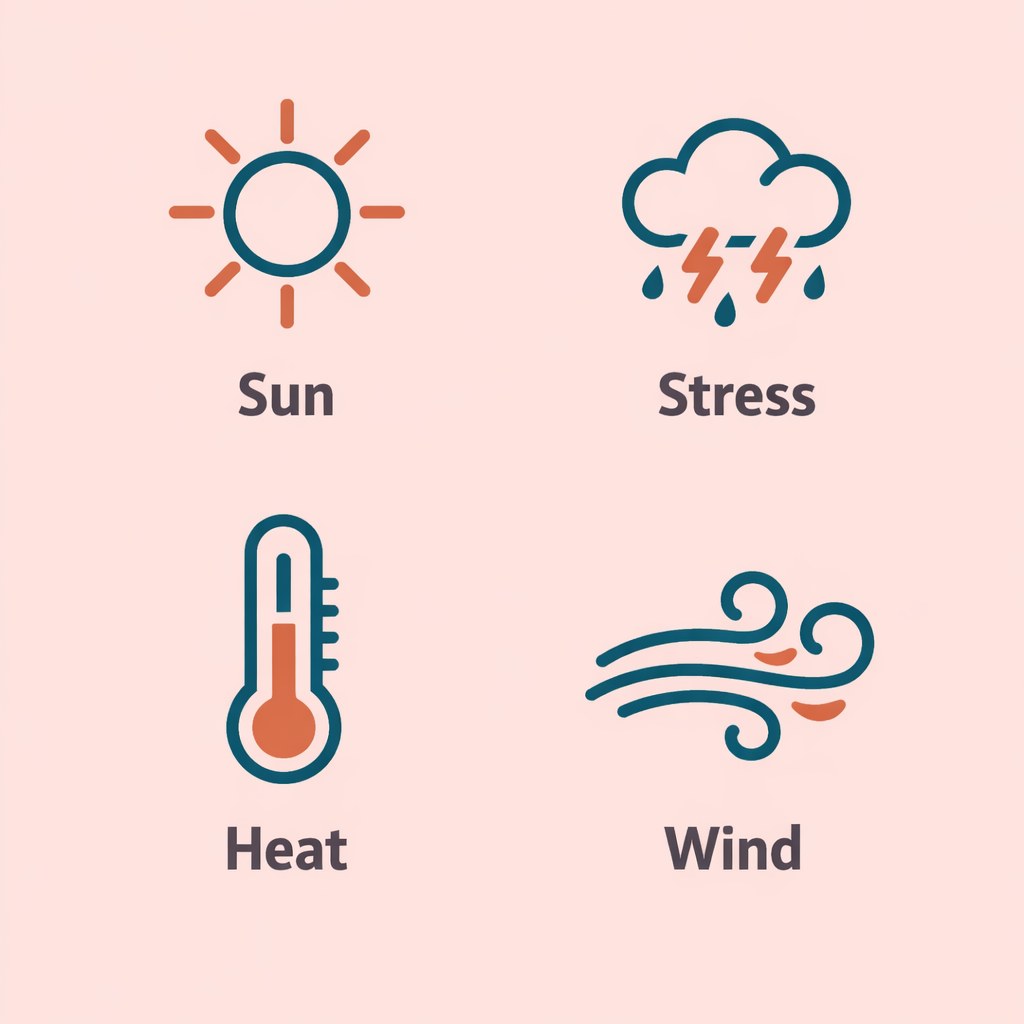
Rosacea flares tend to follow triggers, and they’re surprisingly ordinary. In a National Rosacea Society survey of 1,066 rosacea patients, 81 percent named sun exposure, 79 percent named emotional stress and 75 percent named hot weather (https://www.rosacea.org/rosacea-review/2002/summer/new-survey-pinpoints-leading-factors-that-trigger-symptoms). Wind, exercise, alcohol and hot baths each came in above half. The survey is from 2002, but it’s still the one patient groups cite most, and its findings line up with what dermatologists describe today. Not everyone reacts to everything. Your list is personal, which is why it helps to write it down.
Advertisement
Food and drink show up too, though less often than people assume. In the same survey, 45 percent pointed to spicy foods and 36 percent to hot drinks. Smaller numbers named certain fruits, marinated meats and dairy. It’s worth saying that a trigger isn’t a cause. Your morning coffee didn’t give you rosacea, but its heat may set off a flush if you already have it. Many people find they can keep the coffee and simply let it cool a bit.
Here’s the part that trips people up. Sensitive skin reacts to many of the same things – cold wind, heat, a new product. So a list of triggers can’t tell you which condition you have. What a trigger diary can do is show a pattern over time, and that’s useful to a dermatologist. Note the date, what you were doing, what you ate or put on your skin, and how long the redness lasted. Two or three weeks of notes, plus a few photos taken in daylight, will tell your doctor more than anything you can describe from memory.

Which skin care products can make redness worse?
In that same survey, 41 percent of respondents named skin care products as a trigger and 27 percent named cosmetics. The American Academy of Dermatology suggests people with rosacea avoid putting several ingredients on their face, including alcohol, camphor, fragrance, glycolic acid, lactic acid, menthol, sodium lauryl sulfate and urea (https://www.newswise.com/articles/7-rosacea-skin-care-tips). If you have reactive skin of any kind, that list is worth taping inside your medicine cabinet. Some of these hide in plain sight. Menthol and camphor give cooling and tingling products their kick, and that tingle is irritation, not proof the product is working.
Fragrance deserves its own mention, because it’s everywhere. It shows up in cleansers, moisturizers, sunscreens and products sold as natural. Essential oils count as fragrance as far as your skin is concerned, no matter how pure the label makes them sound. Sodium lauryl sulfate is a foaming agent common in cleansers, and it can strip a skin barrier that’s already struggling. Alcohol tends to turn up in toners and lightweight gels. When in doubt, a shorter ingredient list is usually the safer bet.
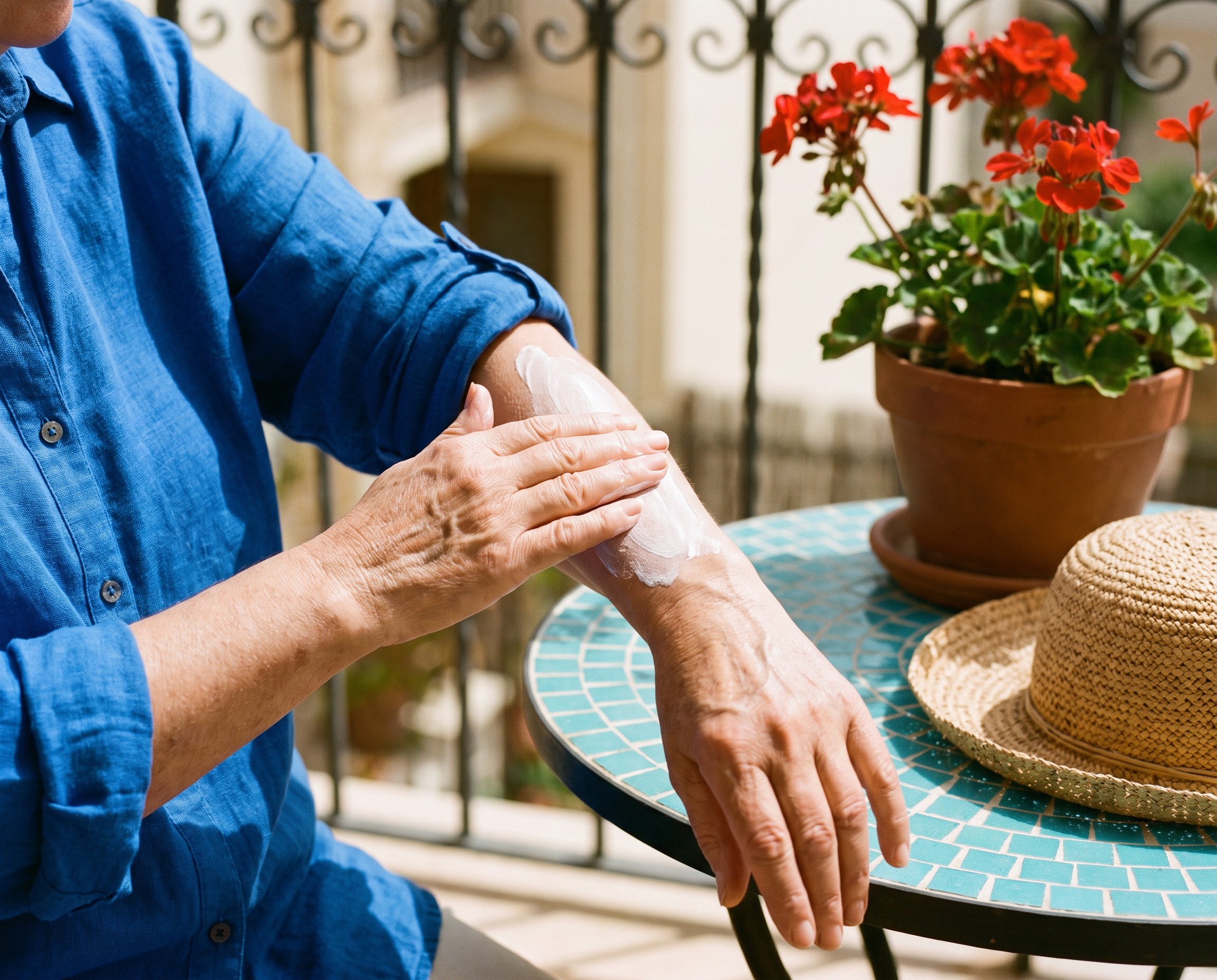
How you use products matters as much as what’s in them. The AAD advises against rubbing and scrubbing and suggests skipping washcloths, facial sponges and exfoliators. Cleanse with your fingertips, rinse well and pat dry. Before you put something new on your face, test it on a small patch of your inner arm once a day for seven to ten days. And wear sunscreen every day, since sun is the most common trigger of all. The academy recommends a broad-spectrum, water-resistant SPF 30 or higher made with zinc oxide, titanium dioxide or both.
Can a cream you’re already using cause rosacea-like redness?
Yes, and this one is worth knowing before you start treating yourself. Steroid creams can cause what dermatologists call steroid rosacea. According to DermNet, after several weeks of applying a topical steroid to the face, the skin can turn red, develop small bumps and pustules, burn, itch and become sensitive to almost everything (https://dermnetnz.org/topics/steroid-rosacea). The risk is highest with strong steroids, but the pattern is a good reason not to reach for an anti-itch cream every time your face looks angry. It becomes a frustrating loop. The cream calms the redness for a while, the redness returns worse, and you reach for the cream again.
If you’ve been using a steroid on your face, don’t just stop cold. Stopping suddenly can cause a rebound flare that’s worse than what you started with. Doctors usually taper the cream gradually or switch to a milder one. Tell your dermatologist exactly what you’ve been using and for how long, including anything a friend lent you or you picked up on vacation. That history can change the diagnosis entirely.
What other conditions can look like rosacea?
A red face isn’t always rosacea or sensitive skin. Several other conditions can look similar, which is a big reason a professional opinion matters. Lupus can cause a red rash across the cheeks, but it often has a violet tint and a sharper edge, and it tends to come back with sun exposure (https://community.the-hospitalist.org/content/great-mimickers-rosacea). Seborrheic dermatitis brings greasy scale that spreads beyond the center of the face to the scalp, eyebrows and ears. Polymorphous light eruption causes bumps that appear suddenly after sun and fade within about a week. Some medications, including certain cancer drugs, can cause facial redness and bumps within a couple of weeks of starting them.
You don’t need to memorize any of that. The point is that telling these apart takes training and sometimes a test. A dermatologist will look at where the redness sits, its color and texture, what else is going on in your body, and what you’ve been putting on your skin. If you also have joint pain, unusual fatigue, muscle weakness or a rash elsewhere on your body, mention it. It may have nothing to do with your face, or it may be the clue that matters most.
What changes for mature and aging skin?
For many women, the years around menopause are when facial redness first becomes a real problem. A recent overview in The Dermatologist notes that research is still limited, but newer studies link perimenopause to both new rosacea and worsening of existing rosacea (https://www.hmpgloballearningnetwork.com/site/thederm/nrs-approved-features/perimenopause-may-mark-rosaceas-onset-or-worsening). Falling estrogen can leave skin thinner, drier and quicker to react. Hot flashes bring repeated facial flushing, and that may aggravate rosacea. Add poor sleep and stress, two common companions of this stage, and it’s easy to see why the face gets caught in the middle.
There’s an irony here that I think gets too little attention. Many anti-aging products are built around glycolic acid and lactic acid, both of which sit on the AAD’s avoid list for rosacea. Plenty of women in their 50s and 60s add a peel pad or an exfoliating serum just as their skin is becoming more reactive, then wonder why their cheeks won’t calm down. If your redness started around the time you added a new anti-aging step, write that down. It doesn’t mean those ingredients are bad. It means they might be wrong for your skin right now.
If you’re over 60 and the redness is brand new, give it extra attention. Rosacea can begin later in life, but new redness at this age has more possible explanations, and a longer medication list is one of them. Check in on your eyes too, since they’re easy to overlook. In a 2022 National Rosacea Society survey of 609 patients, 73 percent had signs or symptoms of ocular rosacea, most often dry eyes, grittiness and itching (https://www.rosacea.org/rosacea-review/2022/summer/ocular-rosacea-symptoms-common-but-treatment-helps). Many of us blame dry, gritty eyes on age or screens. If your eyes and your cheeks are both acting up, say so at your appointment.
When should you see a dermatologist?
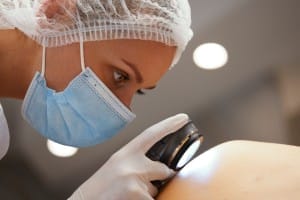
You don’t need a crisis to book an appointment. If redness in the center of your face lasts for weeks or keeps coming back, that’s reason enough. The same goes for small visible blood vessels, red bumps without blackheads, burning that doesn’t settle after you’ve simplified your routine, or any thickening of the skin on your nose. Get seen sooner if your eyes are involved, if the rash has a violet tint, if you feel unwell in other ways, or if your face got worse after using a steroid cream. None of these mean something is seriously wrong. They mean it’s time for someone qualified to take a look.
Make the visit count by bringing evidence. Take photos in natural light on a good day and on a bad day, since your skin may look perfectly calm in the exam room. Bring your trigger diary and a list of every product you use, or just snap pictures of the ingredient labels. List your medications and supplements too. If rosacea is the answer, there are prescription creams and oral medications that target the inflammation itself, which no over-the-counter moisturizer can do. And if it’s sensitive skin after all, you’ll leave with a clear answer and a simpler routine, which is a relief of its own.
FAQs
Can sensitive skin turn into rosacea?
There’s no simple answer. The two overlap a great deal, and people with rosacea often have sensitive skin as part of the condition. By definition, sensitive skin is discomfort that a skin disease can’t explain. So if a dermatologist finds rosacea, the rosacea becomes the explanation for the stinging. What matters most is getting the right label now, because it shapes what you put on your face.
Is rosacea curable?
Rosacea is a chronic condition, so there’s no cure in the usual sense. It can be managed, though, and often very well. Prescription treatment, sun protection, gentle skin care and knowing your triggers all help. Many people go long stretches with calm skin.
Can I treat it with over-the-counter products?
Gentle, fragrance-free products and a daily mineral sunscreen are a good base for anyone with reactive skin. They can’t treat the inflammation behind rosacea the way prescription options can. Please don’t use hydrocortisone or other steroid creams on your face without a doctor’s guidance. They can make things worse over time.
Does diet cause rosacea?
Food doesn’t cause rosacea, but it can set off flares. Alcohol, spicy foods and hot drinks are among the most commonly reported triggers. Your list may look different from someone else’s. A diary is the best way to find out what affects you.
Do I have to give up makeup?
No. The AAD suggests water-based or powder formulas, and a green-tinted concealer can help tone down redness. Patch test new makeup the same way you would a skin care product. Remove it gently at night, without scrubbing.
Redness is easy to shrug off. It doesn’t hurt much, it fades a little, and sensitive skin feels like a reasonable explanation. But your face changes over a lifetime, and a new pattern deserves the same attention you’d give any other change in your body. Pay attention, write things down, and take your notes to someone trained to read them. You may find out it really is sensitive skin! Or you may finally get a name for what’s been happening, and a plan that works.
Related Posts