Oct
If you click on links we provide, we may receive compensation.
You know the moment. You pull on a dark sweater, glance down, and there they are – little white flakes on your shoulders, right before you walk out the door. It’s annoying, and if we’re honest, a little embarrassing. So you do what feels logical and reach for the dandruff shampoo every single morning. If some is good, more must be better. But your scalp is skin, and it doesn’t always reward that kind of enthusiasm.
Here’s the short answer before we get into the details. Most people don’t need a medicated shampoo every day. Some formulas are gentle enough for daily use, while others are built for two or three washes a week. The right rhythm depends on the active ingredient in the bottle, your hair type, and frankly, the age of your scalp. Get that rhythm right and the flakes usually settle down. Get it wrong and you can end up trading dandruff for a dry, itchy scalp that flakes for a whole new reason.
How Common Is Dandruff, Anyway?

More common than most people think. Seborrheic dermatitis, the condition behind most stubborn dandruff, affects about 5.6 percent of adults worldwide. That figure comes from a 2024 meta-analysis in JAMA Dermatology that pooled 121 studies covering more than 1.2 million people. Source: https://www.healio.com/news/dermatology/20240713/global-seborrheic-dermatitis-prevalence-greater-than-previously-reported. And that number only counts cases a clinician diagnosed. Mild flaking that never makes it to a doctor’s office is far more widespread, so if you’re brushing specks off your collar, you’re in very good company.
It also isn’t a hygiene problem. The American Academy of Dermatology says plainly that the poor-hygiene idea is a misconception, and that causes range from oily skin to hair care habits to certain medical conditions. Source: https://www.aad.org/news/how-to-treat-dandruff. A yeast called Malassezia lives on almost everyone’s scalp. It feeds on the oil your skin produces and breaks those oils down into fatty acids. In some people, those byproducts irritate the skin and speed up cell turnover. The cells shed faster than they should, clump together, and show up as flakes.
That explains a lot about how dandruff behaves. It flares where oil glands are busiest. It comes and goes with stress, seasons, and hormonal shifts. It often gets worse in winter, when cold air outside and dry heat inside both stress the skin barrier. And because the yeast never leaves, dandruff rarely disappears for good. That last point matters most for this article, because it means you’re managing dandruff over time rather than curing it once.
It helps to know that dandruff sits on a spectrum. At the mild end you get small white flakes and some itch. At the other end you get seborrheic dermatitis, with greasy yellowish scale and red patches that can spread to the eyebrows, the sides of the nose, and behind the ears. Psoriasis, eczema, and fungal infections can look similar, which is why persistent flaking deserves a closer look. Plain dry scalp is a different thing entirely. Those flakes are smaller and powdery, the scalp feels tight instead of oily, and medicated shampoo often makes it worse.
What’s in a Dandruff Shampoo?
The AAD lists six active ingredients to look for on the label. They are zinc pyrithione, salicylic acid, sulfur, selenium sulfide, ketoconazole, and coal tar. They don’t all work the same way, and that difference sits at the center of the frequency question. Zinc pyrithione, selenium sulfide, and ketoconazole mainly target the yeast. Salicylic acid and sulfur loosen and lift existing scale. Coal tar slows down how fast skin cells turn over.
Each one has a personality. Zinc pyrithione is the mildest of the group and shows up in many everyday anti-dandruff shampoos. Ketoconazole is a stronger antifungal and tends to help people who haven’t had luck elsewhere. Selenium sulfide works well but can leave hair feeling coarse, and it sometimes leaves a tint on light or chemically treated hair. Salicylic acid clears buildup quickly but can dry the scalp if you use it too often. Coal tar works, smells like it works, and comes with a few cautions we’ll get to later.
Here’s the part most people skip. The label on the bottle tells you how often to use it, and those directions vary a lot. Many zinc pyrithione shampoos are formulated for regular, even daily, use. Over-the-counter ketoconazole 1% labels typically direct use every three to four days for up to eight weeks, then only as needed. Selenium sulfide products usually suggest about twice a week. So when someone asks whether they should use dandruff shampoo every day, the honest reply is another question. Which dandruff shampoo?
Advertisement
So Should You Use It Every Day?

The AAD gives practical guidance based on hair type rather than one rule for everyone. If you have fine or straight hair or an oily scalp, you may need to shampoo daily or every other day and use a dandruff shampoo about twice a week. If you have coarse, curly, or coily hair, wash when needed and use a dandruff shampoo about once a week. On the days in between, a regular gentle shampoo does the job. The AAD also says you can follow a medicated wash with your normal shampoo and conditioner if your hair needs it. That pattern of treat, then maintain, works for most people.
Why not every day? Many medicated formulas are more drying than regular shampoo, and that dryness shows up on the hair shaft first. Salicylic acid and sulfur can strip the scalp’s natural oils, and a stripped scalp can start flaking for a new reason. That creates a frustrating loop where irritation looks like dandruff, so you wash more, so you irritate more. Fragrances and preservatives in some medicated shampoos can also trigger contact irritation in sensitive people. They cost more than regular shampoo, too.
That said, daily use isn’t automatically wrong. If your scalp is oily, your hair is fine, and you’re using a gentle zinc pyrithione formula labeled for daily use, you’re probably okay. I’d still watch how your hair feels after a couple of weeks. If it stays soft and your scalp stays calm, keep going. If things start to feel tight or straw-like, pull back to every other wash.
There’s one more thing that matters more than frequency. It’s contact time! The AAD notes that some dandruff shampoos need to sit on the scalp for about five to ten minutes before you rinse. Most people lather for thirty seconds, rinse, and then decide the product doesn’t work. So they use it more often. Two thorough washes a week, massaged into the scalp and left to sit, usually beat seven rushed ones.
How Do You Know If You’re Overdoing It?
Your scalp gives fairly clear signals when it’s had enough. It may feel tight after washing, or start to sting when shampoo hits it. Itching that used to calm down may start getting worse. The flakes may change too, turning from larger oily clumps into fine, dry, powdery specks. That shift often means you’ve traded dandruff for dryness.
Your hair sends signals as well. The lengths may feel rough or brittle. Color may fade faster than usual, especially with selenium sulfide or salicylic acid formulas. You might see redness along the hairline or behind the ears where shampoo runs down. None of these are emergencies, but they’re a clear sign to change the routine.
The fix is usually simple. Cut back to two or three medicated washes a week and use a mild regular shampoo on the other days. Work the medicated shampoo into the scalp and let the suds run through the lengths instead of scrubbing them. Condition the mid-lengths and ends. If one active stops helping, the AAD suggests rotating between shampoos with different active ingredients, so switching from zinc pyrithione to ketoconazole, for example, often gets things moving again.
What Changes for a Mature Scalp?

This is where the frequency question gets personal. After menopause, oil production in the skin drops, and the scalp is no exception. Many women in their 50s, 60s, and beyond notice more flaking and assume it’s dandruff. Often it’s dry scalp instead. Treating dry scalp with a daily medicated shampoo is like treating dry facial skin with a daily acid peel, and it makes the problem worse.
But seborrheic dermatitis doesn’t simply retire with age either. Research suggests it can become more common in older adults, especially among people with reduced mobility or certain neurological conditions such as Parkinson’s disease. So the first step for a mature scalp is telling the two apart. Greasy, yellowish scale with redness points toward seborrheic dermatitis. Fine, white, powdery flakes on a tight scalp point toward dryness. If you’re not sure, a dermatologist can usually tell in a few minutes.
Gray, white, and silver hair need extra care with ingredient choice. The AAD warns that coal tar can discolor blonde, gray, or white hair. Selenium sulfide can also leave a yellowish cast on light or chemically treated hair if it isn’t rinsed thoroughly. For many people with gray hair, zinc pyrithione or ketoconazole is the easier fit. And if you color your hair, tell your stylist which medicated shampoo you use so they can plan around it.
Thinning hair adds another layer. When hair gets thinner, more scalp is exposed to the sun. A sunburned scalp peels, and that peeling can look exactly like dandruff. The AAD recommends a broad-spectrum, water-resistant sunscreen with SPF 30 or higher on the scalp for people with thinning hair, along with a wide-brimmed hat. Coal tar can also make the scalp more sensitive to sunlight, which is one more reason to skip it if you spend time outdoors. For most mature scalps, I think the sweet spot is a gentle antifungal once or twice a week, a mild hydrating shampoo the rest of the time, and sun protection every day.
Does Washing Less Make Dandruff Worse?

For a lot of people, yes. The AAD notes that infrequent shampooing can make dandruff more noticeable, even though it doesn’t cause it. When you go several days between washes, oil builds up, the yeast has more to feed on, and dead cells pile into larger flakes. That’s why some people swing between two extremes. They either wash with harsh medicated shampoo every day or barely wash at all.
The middle path works better for most scalps. Wash often enough to keep oil and scale from building up, using a gentle shampoo that doesn’t strip. Then bring in the medicated shampoo a few times a week as your treatment step. People with curly or coily hair may wash less often overall, and that’s fine. The AAD suggests applying dandruff shampoo just to the scalp for textured hair, since the actives can dry the lengths, and there are dandruff shampoos made for coarse hair that are more hydrating.
It’s worth thinking about what else goes on your scalp. Heavy styling products and scalp oils can add to buildup. Some plant oils may even give Malassezia more to feed on, which is why oiling an itchy, flaky scalp sometimes backfires. That doesn’t mean every oil is a problem. But if you oil your scalp and your dandruff keeps coming back, try stopping for a few weeks and see what happens, since it’s a cheap experiment.
How Should You Build a Simple Routine?
Start with a treatment phase. For two to four weeks, use a medicated shampoo two or three times a week, following the label directions for your specific active ingredient. Massage it into the scalp, leave it on for five minutes or whatever the label says, and rinse well. On the other wash days, use a gentle regular shampoo. Condition from mid-length to ends so your hair doesn’t pay the price for treating your scalp.
Once things calm down, move into maintenance. For many people that means one medicated wash a week. Others can stretch it further, using medicated shampoo only when they feel the familiar itch coming back. Ketoconazole in particular has research supporting once-weekly use to help keep flare-ups from returning. Pay attention to the seasons too, since a lot of people need more help in winter and less in summer.
Keep the rest of the routine simple. Don’t scratch with your nails, since broken skin flakes more and can get infected. Rinse thoroughly after workouts if sweat sits on your scalp. Manage stress where you can, because flares often follow stressful stretches. And give any new shampoo at least a few weeks before deciding it doesn’t work, because rotating products every few days makes it impossible to tell what’s helping.
When Should You See a Dermatologist?
Most dandruff responds to over-the-counter shampoo. But the AAD says that if symptoms continue after using a dandruff shampoo, it’s time to see a board-certified dermatologist. That usually means a few weeks of proper use without real improvement. Thick, crusted plaques, bleeding, significant redness, or pain are also reasons to book a visit. So is flaking that spreads to the face, chest, or ears in a way that looks more like a rash than loose flakes.
A dermatologist can confirm whether you’re dealing with dandruff, seborrheic dermatitis, psoriasis, eczema, or a fungal infection. Those conditions need different treatments, and guessing wrong can waste months. Prescription options include stronger ketoconazole, ciclopirox shampoo, short courses of topical steroids for inflammation, and newer non-steroid options. In late 2023, the FDA approved roflumilast foam for seborrheic dermatitis, which gave people another tool for stubborn cases. Sudden hair loss alongside scalp symptoms is also worth getting checked – not a reason to panic, but a reason to stop guessing.
Frequently Asked Questions
Can I use zinc pyrithione shampoo every day?
Often, yes. Many zinc pyrithione shampoos are formulated for regular use, and daily use is generally fine if your scalp is oily and your hair tolerates it. Check the label for its specific directions. If your scalp starts feeling tight or your hair gets dry, drop to every other day and use a gentle shampoo in between. How your hair feels after a couple of weeks is the best guide.
Can dandruff shampoo cause hair loss?
Normal use of over-the-counter dandruff shampoo isn’t a known cause of hair loss. Hair can feel drier and break more easily with overuse, which some people mistake for shedding. Scratching and ongoing scalp inflammation can also contribute to hair problems. If you notice real thinning or patches of loss, see a dermatologist instead of switching shampoos again. Hair loss has many causes, and most have nothing to do with dandruff.
Is dandruff shampoo safe for color-treated hair?
It can be, with a little care. Selenium sulfide and coal tar are the most likely to affect color, especially on blonde, gray, or white hair. Zinc pyrithione and ketoconazole tend to be easier on color. Apply medicated shampoo to the scalp instead of the lengths, rinse thoroughly, and follow with a color-safe conditioner. Let your stylist know what you use.
Will dandruff go away permanently?
Usually not, because the yeast involved lives on nearly everyone’s scalp. Dandruff tends to come and go over a lifetime, with flares tied to stress, weather, and hormones. The goal is control rather than cure. A simple maintenance routine keeps most people comfortable. When it returns, a short treatment phase usually brings it back in line.
How can I tell dry scalp from dandruff?
Dry scalp flakes are small, white, and powdery, and the scalp feels tight or itchy without being oily. Dandruff flakes tend to be larger and slightly oily, sometimes yellowish, and the scalp may look greasy or red. Dry scalp often shows up with dry skin elsewhere, especially in winter. Dandruff often flares when oil builds up between washes. If medicated shampoo makes your flaking worse, dry scalp is a strong possibility.
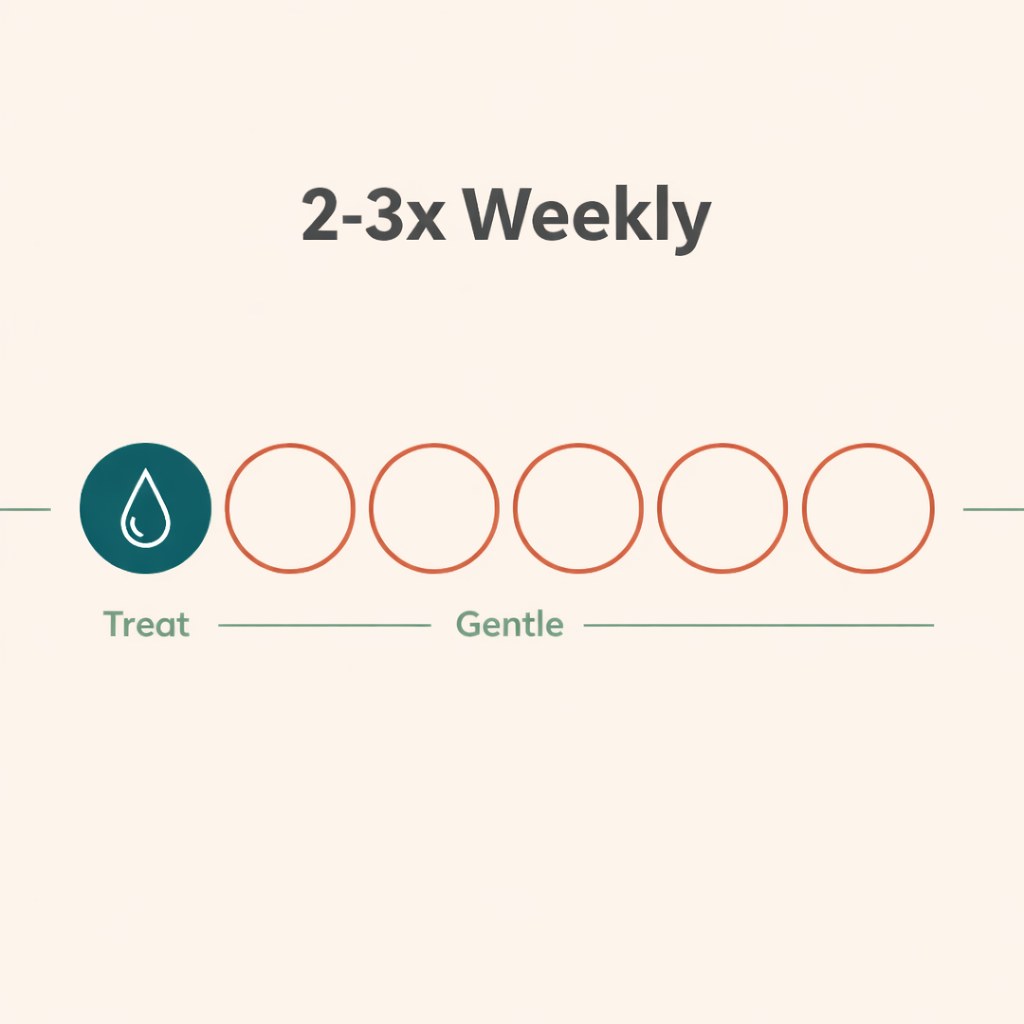
So, should you use dandruff shampoo every day? For most people the answer is no, and that’s good news. A medicated wash two or three times a week, done properly with real contact time, does more than a rushed daily scrub. The right frequency depends on the active ingredient, your hair type, and whether your scalp runs oily, dry, or somewhere in between. Mature scalps in particular often need less medication and more moisture than they get. Treat your scalp like the skin it is, and it usually settles down.
Related Posts