Oct
If you click on links we provide, we may receive compensation.
You know the feeling. Your ponytail used to need two wraps of the elastic, and now it needs three. The part on top of your head looks a little wider under the bathroom light, and the ends feel like straw by Thursday no matter what you put on them. Maybe a few strands have started growing in wiry and bent, sticking up when the rest lies flat. And it’s all happening around the same time your favorite face cream stopped feeling like enough. That’s no coincidence! Most of us were taught to treat hair and skin as two separate projects with two separate shelves of products, but they have a lot more in common than we were told.
Your scalp is skin. Every hair grows from a follicle sitting in that skin, fed by the same blood supply, bathed in the same hormones and coated by oil from the same kind of glands that keep your face soft. So when estrogen starts to fall in your 40s and 50s, the effects don’t stop at your hairline. The thinning, the dryness and the new texture you see in the mirror are often the same story your skin is telling, playing out in a second place. Here’s what’s going on, and what plain, everyday haircare can do about it.
Why does your hair change at the same time as your skin?
Estrogen does a lot of quiet work in the body, and hair follicles are one of its job sites. Researchers have found estrogen receptors right in the follicle, which tells you the hormone has a say in how hair grows. Estrogen helps keep hair in its growth phase longer, so each strand has more time to get long and full before it rests and sheds. As levels drop through perimenopause and menopause, that growth phase can shorten. Hairs spend less time growing and more time resting, and new hairs can be slower to replace the ones you lose. Breastcancer.org lays this out in its overview of menopausal hair changes at https://www.breastcancer.org/treatment-side-effects/menopause/hair-changes, and it adds an honest note worth keeping in mind – it isn’t always clear how much comes from falling estrogen and how much comes from plain aging.
The balance between hormones shifts too. While estrogen falls, androgens – the hormones people often call male hormones – don’t drop as quickly, so they have more influence than before. In follicles that are sensitive to them, androgens can shrink the follicle over time, and the hair it makes comes out finer and shorter. It’s the same hormonal tilt that can bring a few stray chin hairs or a breakout along the jaw while the rest of your face gets drier. That sounds contradictory, but it isn’t. Different follicles respond to the same hormones in different ways, depending on where they sit on the body.
Then there’s oil. Oil glands slow down as estrogen declines, and that’s a big reason mature skin starts to feel tight and papery. The same glands live on your scalp. Less oil there means a drier scalp and less natural oil working its way down each strand to coat and protect it. Your face loses its cushion of moisture, and your hair loses its built-in conditioner at the same time. Once you see it that way, a lot of midlife hair frustration starts to make sense.
How common is thinning hair after 40?
It’s more common than most women realize, and it rarely comes up at dinner with friends. A study published in the journal Menopause in 2022 looked at 178 postmenopausal women at a clinic in Bangkok and found that about 52 percent of them had female pattern hair loss. Most of those cases were mild, which matches what many women describe – a slow thinning at the part and crown rather than bald patches. The researchers also found that low self-esteem was common in the group, and it rose as the hair loss got more noticeable. You can read the abstract at https://pubmed.ncbi.nlm.nih.gov/35357365/. One study from one clinic doesn’t speak for every woman everywhere, but it lines up with what dermatologists see every day.
Female pattern thinning looks different from the way men lose hair. Women usually keep their front hairline. Instead, the part gets wider and more scalp shows on top of the head, especially under bright overhead light. The ponytail gets thinner. Some women notice more hair in the shower drain or the brush, while others never see extra shedding at all and just realize their hair looks like less than it did a few years ago. Both are normal ways for this to show up.
There’s one thing I want to flag before going further. Sudden, heavy shedding, round bald patches, a scalp that’s red, scaly, sore or very itchy, or hair loss that arrives with other new symptoms isn’t the slow, hormonal thinning this article is about. Thyroid problems, low iron, major stress, illness and some medications can all make hair fall out, and those need a real look from a professional. The American Academy of Dermatology recommends seeing a board-certified dermatologist early, because finding the cause improves your chances of getting it under control. That’s a doctor’s job, not a shampoo’s. For the gradual changes most women notice, though, daily habits matter more than people think.
Why does hair get so dry in your 40s and 50s?
Think about what a strand of hair needs to look smooth. Its outer layer, the cuticle, is made of overlapping cells that lie flat like shingles on a roof. When they lie flat, light bounces off evenly and the hair looks shiny. Scalp oil helps keep those shingles sealed and slick. With less of it, the cuticle lifts more easily, moisture escapes and the strand feels rough. Breastcancer.org’s overview also points out that lower oil makes the scalp less acidic, which is one more reason the cuticle can lift and hair can feel coarse.
Advertisement
Years of wear add up too. Hair that reaches past your shoulders can be two or three years old at the ends, and it’s been through every blow-dry, color appointment, beach day and chlorinated pool in that time. Hair can’t repair itself the way skin can, because the strand isn’t living tissue once it leaves the follicle. So the damage stacks up from root to tip, and the ends take the worst of it. Add a drier scalp sending down less oil, and those ends get brittle fast. That’s why split ends and breakage often seem to show up all at once in midlife.
Gray hair plays a part as well. As the pigment cells in the follicle slow down, new hairs grow in without color, and many women find those strands feel different. They can seem drier, wirier and harder to control than the hair around them. Gray hair can also look dull and pick up a yellow cast from sun, heat and minerals in tap water. None of this is a problem to fix. But it does mean gray hair often wants more moisture and a gentler hand than you’re used to giving it.
Why does hair texture change in midlife?
This one surprises people the most. A woman who had straight hair her whole life suddenly finds a bend at the back of her neck. Someone with loose waves sees them turn frizzy and uneven. Curly hair can loosen. Texture is set largely by the shape of the follicle, and hormonal shifts can change that shape over time, so the hair that grows out of it changes too. It can feel like someone swapped your hair for a stranger’s.
Researchers have measured part of this. In a 2009 study in the Journal of Cosmetic Science, scientists in Japan tested hair from 230 women between the ages of 10 and 70 and found that shine dropped with age. When they looked for the reason, they pointed to an irregular increase in the curl of individual hairs as women got older, which makes strands line up less neatly and reflect light less evenly. The study is at https://library.scconline.org/v060n06/51. In plain terms, older hair tends to bend in more directions. And hair that bends in more directions looks frizzier and duller even when it’s healthy. Add strands that are getting finer, with less weight to hold a style, and you can end up with hair that’s thinner and frizzier at the same time.
What should you change in your wash routine?
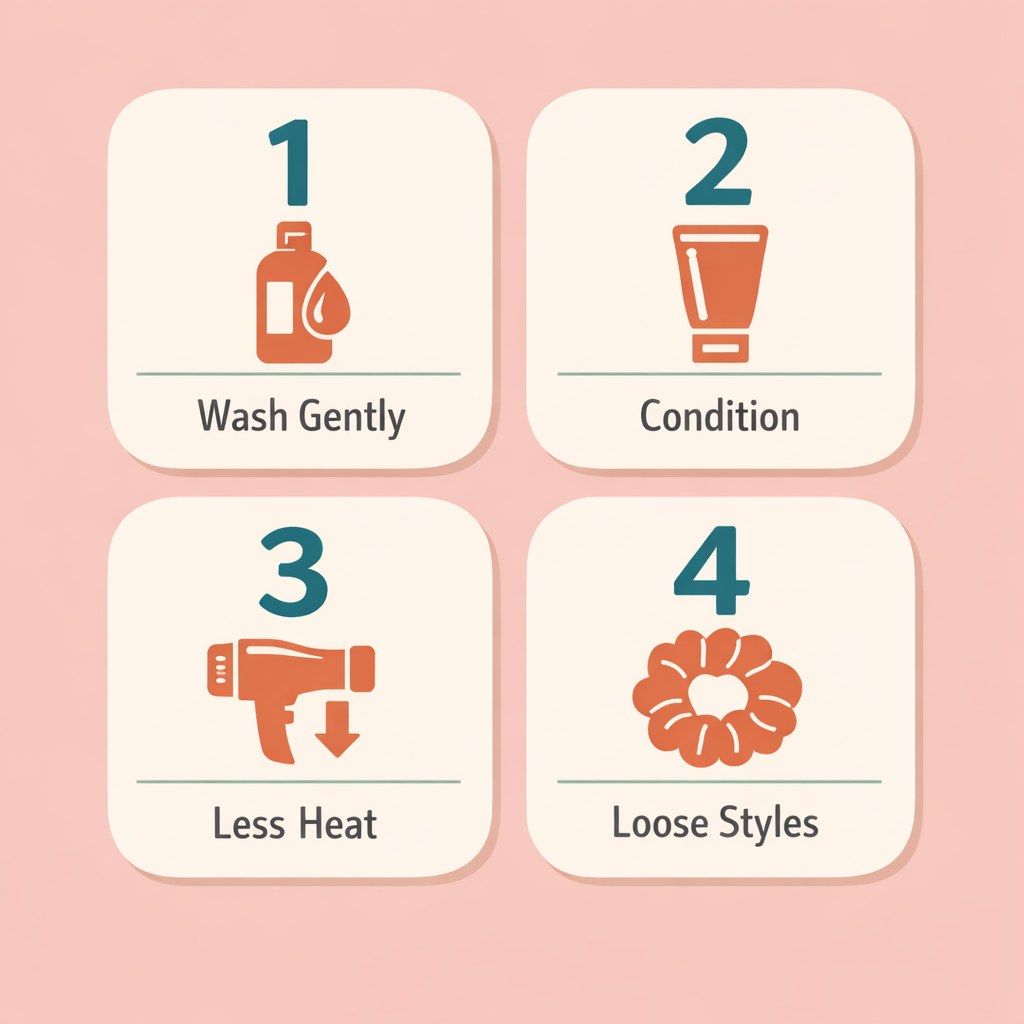
Start with how often you shampoo. A drier scalp doesn’t need daily washing, and stretching washes to two or three times a week gives your scalp’s oil more time to travel down each strand. Choose a mild, moisturizing shampoo and focus it on the scalp, where oil, sweat and styling product build up. The suds that run down the lengths as you rinse are enough to clean them. The AAD’s hair loss tips note that some shampoos strip moisture from hair, so gentle beats squeaky clean every time. You’ll find those tips at https://www.aad.org/public/diseases/hair-loss/treatment/tips.
Conditioner isn’t optional anymore. Use it every time you shampoo, from the middle of your hair down to the ends, and give it a couple of minutes before you rinse. Once a week, swap in a richer mask or deep conditioner, especially if you color your hair or your ends feel rough. A leave-in conditioner or light cream after washing gives dry hair a second layer of protection through the day. If your hair is fine, look for lightweight formulas so you get moisture without flattening the root. It’s the same idea as layering a hydrating serum under a cream on your face, sized for hair.
How should you handle drying, brushing and styling?
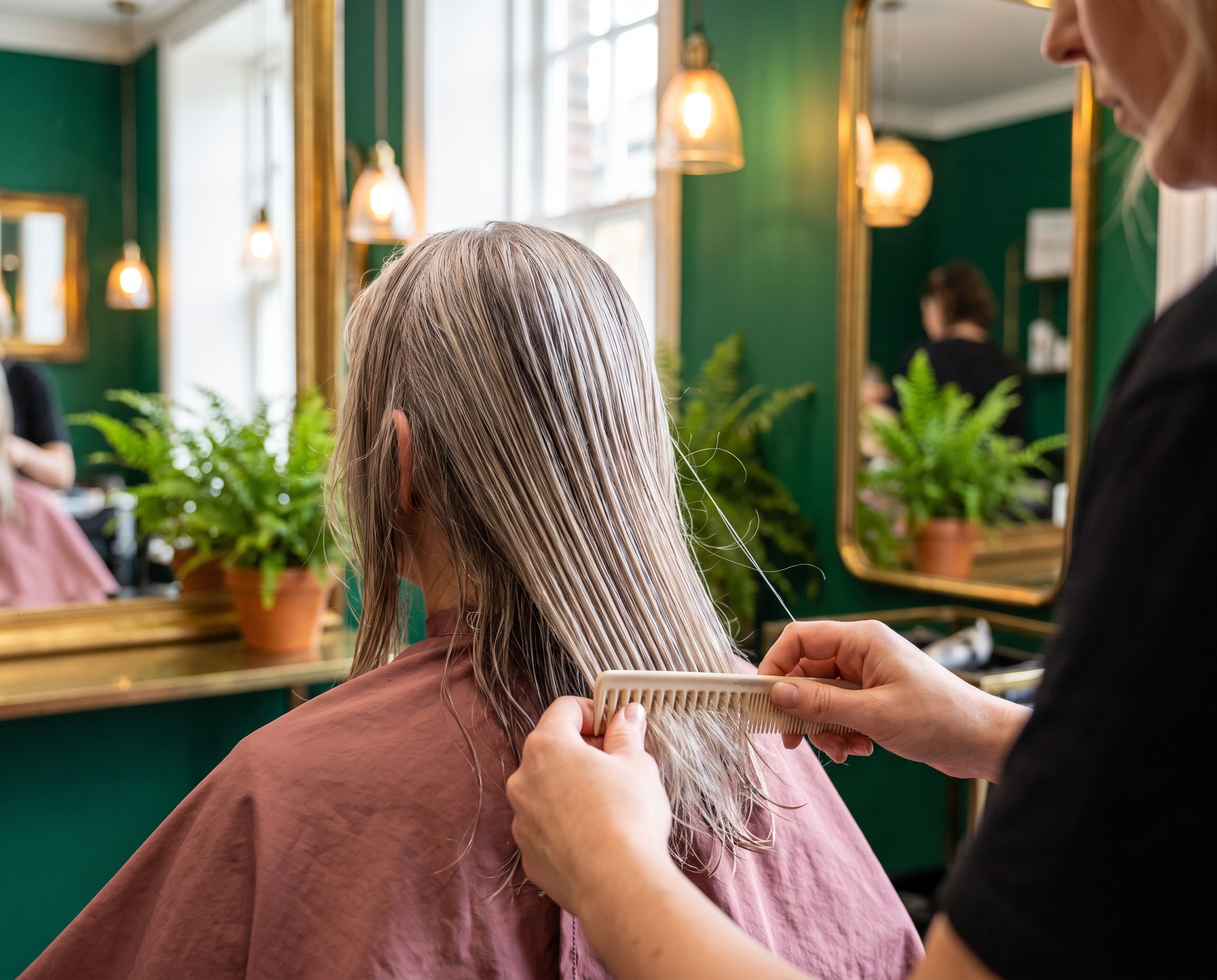
Right after washing is when hair is weakest. Wet hair stretches and snaps more easily than dry hair, so the way you towel off makes a real difference. Skip the rough rubbing. Wrap your hair in a microfiber towel or a soft cotton T-shirt and press the water out. The AAD suggests a microfiber towel because it speeds drying and cuts down on time with the blow-dryer. Then detangle with a wide-tooth comb, starting at the ends and working your way up.
Heat is the next place to pull back. Flat irons, curling irons and dryers at full blast are tough on fine, dry, older hair. Let your hair air-dry partway before you reach for the dryer, use the lowest heat setting that gets the job done and always use a heat protectant. The AAD goes further and suggests saving curling irons, flat irons and hot combs for special occasions. That may feel like a big ask if you’ve styled your hair every morning for 30 years. But even cutting back to a few days a week gives your ends a break.
Tension matters more than most women think. Tight ponytails, buns and braids pull on the follicle, and over time that pull can cause a kind of hair loss called traction alopecia, which can become permanent. Hair at the temples and along a thinning part is already more fragile, so wear styles a little looser and move where you place the elastic from day to day. Swap thin elastics for soft scrunchies or spiral ties, and reach for a claw clip when you can. A silk or satin pillowcase cuts down on friction while you sleep. None of these changes is dramatic, but together they protect the hair you have.
Does your scalp need a skincare routine too?
It’s a good way to think about it. Your scalp is skin, and it ages like the rest of your skin, with less oil, slower renewal and a weaker barrier. Some women notice dry flakes for the first time in their 50s, and that isn’t always dandruff. A dry, tight scalp can flake the same way your shins do in winter. Treat it gently, with a moisturizing shampoo, cooler water and fewer harsh products sitting on it all day.
Scalp massage is a simple habit worth adding. When you shampoo, use the pads of your fingers instead of your nails and work in small circles across your whole scalp for a minute or two. It helps loosen flakes and leftover product, spreads your natural oil and simply feels good. Some people like to rub a little light oil into a dry scalp before washing. If you try it, keep it light and wash it out well, so you don’t trade dryness for buildup. And don’t forget the sun – a wide part or thinning crown can burn, so a hat outdoors is a smart habit for your scalp and your face.
What changes for mature hair after 60?
Hair after 60 tends to settle into a new normal. The big hormonal swings of perimenopause have passed, so many women find their hair stops changing as quickly as it did in their 50s. What remains is usually finer, drier and grayer hair that needs steady, gentle care. The dryness rarely improves on its own, since oil production stays low. So moisture becomes the center of the routine, the same way it does for mature skin.
This is the age to be honest about what your hair can handle. Fewer chemical services help a lot. If you color, ask your stylist about gentler options, or about blending your gray instead of covering every root every four weeks. Perms and chemical straightening are harder on older hair, and the AAD recommends going to a salon that specializes in those services if you choose them. A good cut can do more than any product. Shorter layers or a blunt bob can make fine hair look fuller, because the weight sits where the hair is thickest.
Do the same habits that help your skin help your hair?
In a lot of ways, yes. The things that protect mature skin also protect the scalp and the hair growing from it. Not smoking matters, because smoking causes inflammation that can make hair loss worse, according to the AAD. Eating enough protein and iron matters, since hair is made of protein and the body treats hair as a low priority when it’s running short. Crash diets and very low calorie eating can trigger extra shedding a few months later. Sleep and stress affect both, since your skin and your hair both renew on cycles your body controls.
It helps to think of your routines as one system instead of two. When you switch to a richer face cream in the fall, it’s probably time for a deeper conditioner too. When you protect your face from the sun, protect your part. When you cut back on harsh products because your skin got more sensitive, take the same approach to strong shampoos and daily hot tools. Gentle and consistent works for both. It’s less exciting than a miracle product, but it’s what helps.
FAQs
Will my hair go back to normal after menopause?
Some of it may settle. Shedding often slows once your hormones settle, but texture and fullness usually don’t return to what they were at 30. The goal is healthy hair at the age you are now, and gentle care makes a visible difference.
Should I switch to a shampoo for thinning hair?
A mild, volumizing shampoo can make fine hair look fuller because it won’t weigh the hair down. Shampoo can’t regrow hair, though, so set your expectations around how your hair looks and feels. If you’re losing a lot of hair, talk to a dermatologist about the cause.
Is it normal for my hair to suddenly get curly or frizzy?
Yes. Changes in the follicle and finer strands can change how hair bends and how it reflects light. Many women find their natural texture shifts in their 40s and 50s. Work with the new texture, using more moisture and less heat, instead of fighting it every morning.
How often should I wash dry, mature hair?
For most women, two or three times a week is plenty. Wash more often if you exercise hard or your scalp gets oily, and keep the shampoo focused on your scalp. Always follow with conditioner.
Does gray hair need different care?
Often, yes. Many women find gray strands feel drier and coarser, so extra moisture helps. A purple shampoo once a week can tone down yellowing, and a gloss treatment can add shine.
Can stress make my hair thinner?
Yes. A major stressful event, an illness or surgery can push lots of hairs into the resting phase at once, which leads to heavy shedding a few months later. This kind of shedding usually recovers on its own. If it doesn’t, or if it’s severe, see a dermatologist.
Hair and skin have always been connected. Most of us just didn’t notice until they both started changing at once. The same drop in estrogen that dries your cheeks can thin your part, dull your ends and put a new bend in strands that used to hang straight. That’s frustrating, and it’s fine to say so. But it’s also manageable with basics you probably already know from skincare – gentle cleansing, steady moisture, less heat and friction, and protection from the sun. Your hair is changing, and it can still look and feel good!
Related Posts