Oct
Skincare
Your Neck and Hands Are Aging Faster Than Your Face and Your Routine Stops at the Jawline
If you click on links we provide, we may receive compensation.
UV exposure is responsible for about 80 percent of the visible signs of facial aging. That figure comes from a 2013 study of 298 women published in Clinical, Cosmetic and Investigational Dermatology (https://pubmed.ncbi.nlm.nih.gov/24101874/). Now think about where that same sun lands every day. It hits the backs of your hands on the steering wheel. It hits the side of your neck on every walk to the car. And most of us never give those spots the care we give our cheeks!
I see the same pattern over and over. Someone has a solid face routine, with a vitamin C serum, a good moisturizer and daily SPF. Then it all stops at the jawline. The neck gets whatever is left on the fingers, and the hands get nothing at all. Years later the face looks rested while the neck and hands tell a different story. That gap comes down mostly to coverage, and coverage is fixable.
Why do your neck and hands give your age away first?

Start with the honest version. Your neck and hands do not run on a faster clock than your face. The same years pass for all of your skin. What differs is how much damage each area collects and how well it hides that damage. Your neck and hands collect a lot and hide very little. Thin skin shows everything underneath it, from veins to tendons to the loss of the fat that used to cushion them.
A study published in Plastic and Reconstructive Surgery in 2006 asked people to guess women’s ages from photos of their hands alone (https://plasticsurgerypractice.com/client-objectives/aesthetics/reconstructive-surgery/hands-reveal-a-persons-age/). Most guessed correctly. When researchers digitally removed blemishes and visible veins, the same hands were judged younger. Prominent veins turned out to be the strongest age signal of all. That tells you something useful about where to focus. The giveaways on hands are spots, crepey texture and whatever shows through thin skin.
The neck has its own set of signals. Horizontal lines form from years of bending to look down. Crepey texture develops where the skin has lost water and elasticity. Many people also notice a reddish brown, mottled patch on the sides of the neck, with a pale strip under the chin where the jaw casts shade. Dermatologists call that pattern poikiloderma of Civatte, and it is a classic sign of long-term sun exposure. The pale strip is the clue, because it shows exactly where the sun did and did not reach.
How much of neck and hand aging is really sun damage?

Most of it. The 2013 study above compared women who sought out the sun with women who avoided it, across ages 30 to 78. The sun seekers showed more wrinkling, sagging and uneven pigment at every stage. The researchers concluded that UV drove about 80 percent of the visible aging they measured on the face. Nobody has run that exact study on necks and hands. But there is no reason to think the numbers improve in places that get less protection.
And protection is weaker in places you might not expect. Driving is the big one. A 2016 study in JAMA Ophthalmology tested car windows and found front windshields blocked about 96 percent of UVA on average, while driver side windows blocked only about 71 percent (https://safetyandhealthmagazine.com/articles/14075-vehicle-side-windows-offer-little-protection-from-suns-rays-study). UVA is the part of sunlight most tied to skin aging, and it passes through clouds and glass. So the hand on the wheel and the side of the neck near the window take a steady dose on every commute. Over 20 or 30 years of driving, that shows.
Then there is how we apply sunscreen. Researchers at the University of Liverpool used a UV camera to watch people put sunscreen on their faces and found they missed about 10 percent of the face on average (https://www.skinhealthinfo.org.uk/misapplication-of-sunscreen-leaving-people-vulnerable-to-skin-cancer/). That was the face, the area people were paying attention to. The neck and the backs of the hands were not even part of the test. Hands also lose sunscreen every time you wash them, which can be a dozen times a day. Gel manicures add another source of UV, and a 2023 lab study from the University of California San Diego found the curing lamps damaged human skin cells (https://sciencedaily.com/releases/2023/01/230117192929.htm). That was a study of cells in a dish rather than people, but it is one more reason to cover your hands before you sit under the lamp.
What makes neck and hand skin so different from your face?
The skin on the front of your neck is thinner than most of your facial skin. It also has fewer oil glands, so it makes less of its own moisture and dries out faster. Your face sits on a fuller layer of fat and muscle. The neck has less padding, and it moves all day as you turn, swallow, talk and look down at a phone. All that folding creases thin skin over time. Add years of sun and you get lines that settle in and stay.
The backs of your hands are even more exposed. A review in the Journal of Drugs in Dermatology notes that the dermis on the back of the hand is thin and gets thinner with age, measuring roughly 0.2 to 0.9 millimeters in one ultrasound study (https://jddonline.com/articles/challenges-considerations-and-strategies-in-hand-rejuvenation-S1545961616P0809X/). As fat and volume under the skin decline, veins, tendons and bones show more clearly. That is the bony, ropy look many people notice in their 50s and 60s. The same review names ultraviolet radiation as a main outside driver of hand aging. Your hands also spend the day in water, soap, sanitizer and cleaning products, which strip the lipids that keep skin soft.
Put those facts side by side and the picture is plain. Thin skin, few oil glands, constant movement, constant washing and heavy sun. Those are the exact conditions that speed up visible aging. Your face often has the opposite setup, plus a daily routine protecting it. So when people say their neck and hands look older than their face, they are usually right. The good part is that the fix uses tools you already own.
Can you use your face products on your neck and hands?
Yes, in most cases. The ingredients that help your face help neck and hand skin for the same reasons. Sunscreen blocks the UV that breaks down collagen. Retinoids speed cell turnover and support collagen over time. Vitamin C and niacinamide help with uneven tone and brown spots. Ceramides, glycerin and hyaluronic acid hold water in thin, dry skin. None of that changes when you move a few inches below your jaw.
That raises a fair question about neck creams. Some are well made, but most use the same ingredients as a good face cream, often at a higher price. The words neck cream on a label do not mean the formula does anything special for the neck. What matters is the ingredient list, the texture and whether you will use it every day. If your face moisturizer is rich and your skin tolerates it, it can cover your neck and chest just as well. I would rather see someone use one good cream generously than split a small budget across three jars.
There are a few real exceptions. Thin neck skin can react more strongly to retinoids and exfoliating acids than your cheeks do. If you use retinol on your face every night, start the neck at two or three nights a week and put moisturizer on top. Go easy on strong glycolic acid there too. Hands tolerate actives better, but constant washing means anything you apply comes off fast. So hands need more frequent reapplication, especially of sunscreen and moisturizer. The products stay the same, and the schedule changes.
What should a routine below the jawline look like?

Keep it simple and attach it to what you already do. In the morning, when you apply your face serum, take a little extra and smooth it down the front and sides of your neck. Do the same with your moisturizer. Then apply sunscreen to your face, ears, neck, chest and the backs of your hands, in that order. Use a broad spectrum SPF of 30 or higher, which is what the American Academy of Dermatology recommends for daily use (https://www.aad.org/public/everyday-care/sun-protection). Finish by rubbing what is left on your palms into the backs of your hands, then add a little more, since the backs need more than the leftovers.
Hands need a midday plan. Keep a hand cream with SPF next to the sink at work, in your car and in your bag. Reapply after washing when you will be outside or driving. If that feels like a lot, start with the car. A small tube in the cup holder covers the hand and arm that get the most window exposure. Driving gloves are another option if you spend hours on the road, and they never need reapplying.
At night the goal shifts to repair and moisture. Use your retinoid or face treatment on your neck on the schedule your skin tolerates. Follow with a rich cream on the neck and chest. For your hands, apply a thick hand cream or a balm with ceramides or shea butter before bed. Cotton gloves over a heavy cream overnight can soften very dry hands within a few days. Your face routine probably takes five minutes, and adding the neck and hands takes about one more.
What changes for neck and hand skin after 60?

After menopause and into your 60s, the changes speed up. Estrogen drops, oil production falls and collagen keeps declining year after year. Neck and hand skin, which started thin, gets thinner still. Small bumps leave bruises that take longer to fade. Dryness becomes the normal state rather than a winter problem. The brown spots on the backs of the hands, often called age spots or liver spots, also grow more numerous and more defined. Their proper name is solar lentigines, and the sun causes them far more than age does.
For mature skin, comfort comes first. Pick a rich, fragrance free cream for the neck and a hand cream heavy enough to last through a few washes. Retinoids still work after 60, but start low and slow, especially on the neck. Many people do well with a gentle retinol or a bakuchiol product two nights a week. Niacinamide is a good daily choice because it supports the barrier and helps with tone without much irritation. Vitamin C in the morning adds antioxidant protection under your sunscreen.
Sunscreen still matters at 70 and 80. It is never too late to cut down on new damage, and new damage shows fast on thin skin. Older hands also benefit from sun protective clothing, like UPF gardening gloves or a light long sleeved shirt with a collar. A wide brimmed hat shades the neck better than any cream can. These are small habits that protect skin you cannot easily replace. They also keep the spots you already have from getting darker.
Which daily habits make the biggest visible difference?
Some of the biggest gains come from outside the bottle. Wear gloves for dishes and cleaning, since hot water and detergent strip hand skin fast. Pat your hands dry instead of rubbing them, then moisturize while they are still slightly damp. Choose a gentle hand soap over harsh antibacterial formulas when you can. Run a humidifier in winter, when indoor heat pulls water out of thin skin. These steps cost little and protect the barrier you are trying to rebuild.
For the neck, posture plays a small part. Hours spent looking down at a phone fold the same lines again and again. Raising your screen to eye level will not erase those lines, but it cuts down how often you crease them. Sleeping on your back or on a smooth pillowcase may help a little too. Collars, scarves and hats block sun from a part of the body many people forget. Treat your neck as part of your face and most of these habits follow on their own.
When should you see a dermatologist about your neck or hands?
Get any new, changing or unusual spot checked. The backs of the hands, the ears and the neck are common sites for skin cancer because they get so much sun. A spot that bleeds, crusts, grows or looks different from the others deserves a professional look. So does a rough, scaly patch that keeps coming back. Most brown spots on the hands are harmless lentigines. But a dermatologist should make that call, not a bathroom mirror.
A dermatologist can also help if you want more than daily care. Lasers and intense pulsed light treat brown spots and redness on the neck and hands. Prescription tretinoin is stronger than over the counter retinol and has more research behind it. Fillers can restore volume to the backs of the hands so veins and tendons show less. These options cost more and carry some risk, so they are worth a real conversation first. Whatever you choose, daily sunscreen and moisture still decide how well the results last.
FAQs
Can I use my regular face moisturizer on my neck?
Yes. If it works on your face without irritation, it will usually work on your neck. Use enough to cover the front and sides, and carry it down to your chest.
Is a separate neck cream worth buying?
Sometimes, but it is rarely necessary. Most neck creams share ingredients with face creams. Compare the ingredient lists before paying more for the label.
Can I use retinol on my neck and hands?
Yes. Start at two or three nights a week on the neck, since the skin there is thinner and more reactive. Hands tolerate retinol well but need a moisturizer afterward.
Do age spots on the hands fade?
They can lighten with daily sunscreen, vitamin C, niacinamide and retinoids, but it takes months. Laser and light treatments work faster. Without sun protection, the spots come back.
How often should I reapply sunscreen on my hands?
After every hand wash if you will be in the sun or driving, and at least every two hours outdoors. Washing removes most of what you applied.
Is it too late to start caring for my neck and hands at 60?
No. Protecting skin from new damage helps at any age. Thin, dry skin often feels softer within a few weeks of regular moisturizing.
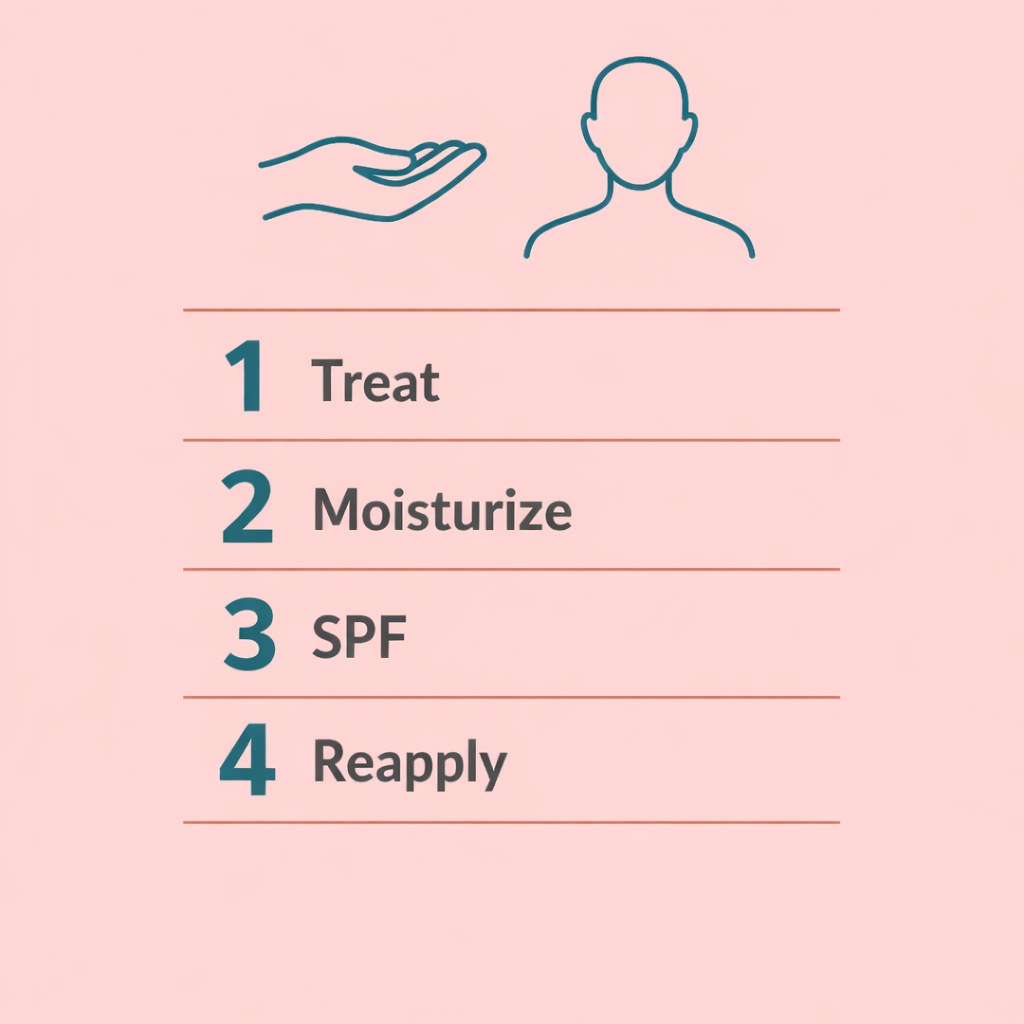
Your face routine is probably good. It just ends too soon. Carrying it down your neck and across your hands takes one extra minute and the products already on your shelf. The real change is habit – sunscreen on the backs of your hands, a tube in the car, cream on your neck every night. Give it six months of steady use. You will likely see softer skin, fewer new spots and a neck and pair of hands that look like they belong to the same person as your face.
Related Posts