Jul
Trends & Opinions, Wellness
Your Dog Is Not a Personal Trainer (But She Is Not Nothing Either)
If you click on links we provide, we may receive compensation.
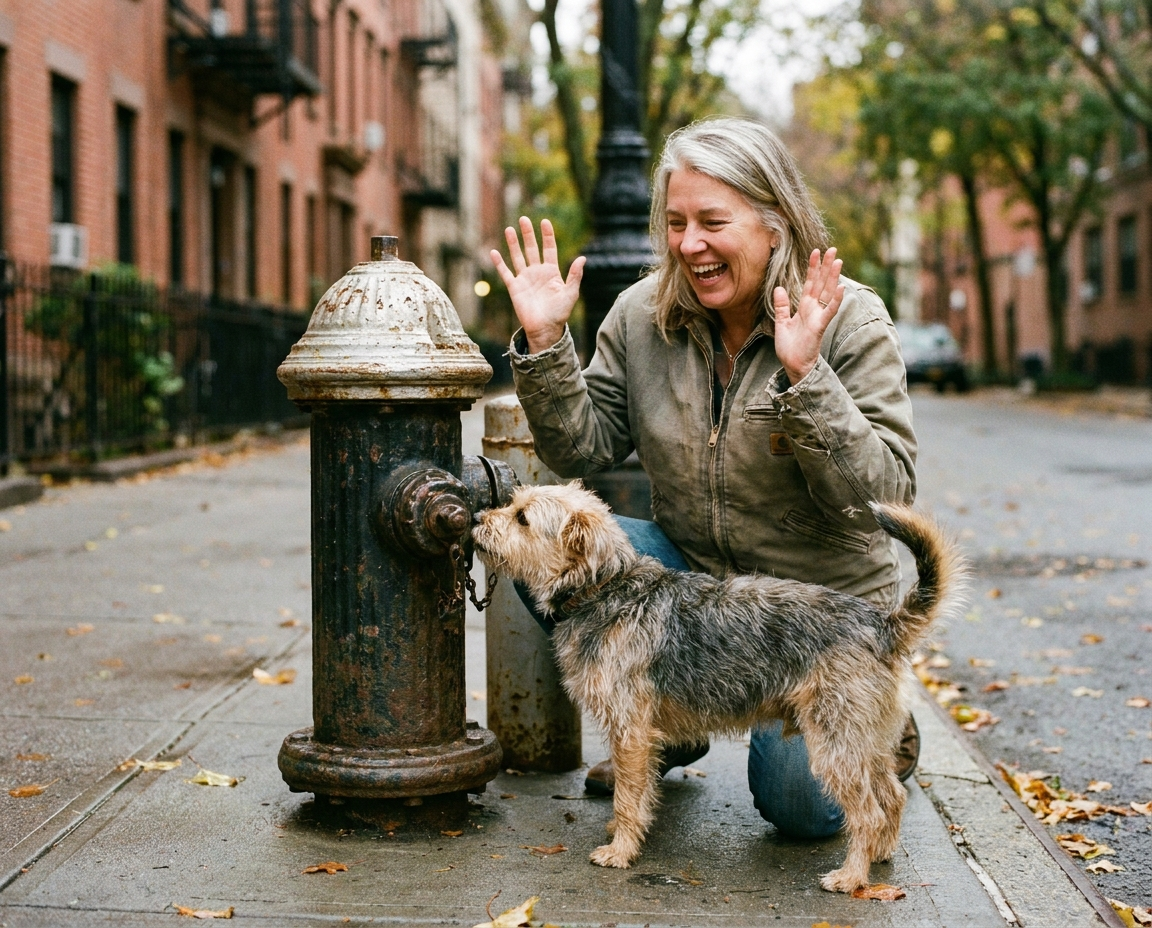
Dog owners walk an average of 22 more minutes per day than people without dogs – a finding from a large UK cohort study of over 3,000 adults published in the Journal of Epidemiology and Community Health. Over a week, that adds up to more than two and a half hours of additional movement. But here is the thing nobody tells you: not all dog walking is the same. The brisk, focused 30-minute stride you take alone on a trail is a fundamentally different physical event than the meandering investigation your Beagle conducts down the same stretch of sidewalk. Your dog has firm opinions about every lamppost, fire hydrant, and suspicious patch of grass within a three-block radius. While she is conducting her olfactory investigation of the neighborhood, you are standing still, phone in hand. So is this actually exercise? The answer is more interesting – and more honest – than most fitness advice suggests.
Does Dog Walking Actually Count as Exercise?
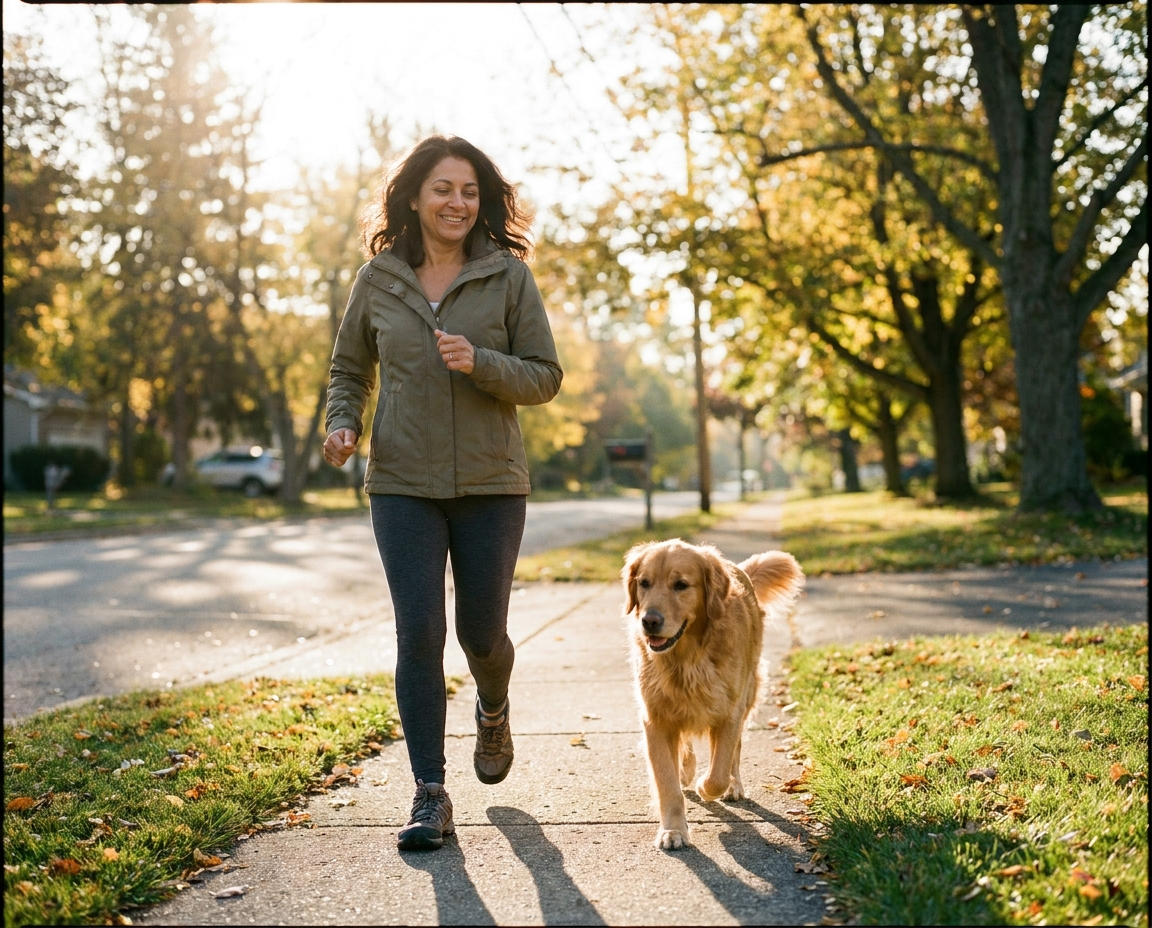
Dog walking counts as physical activity – but whether it rises to “sufficient exercise” depends on what you need, how you walk, and what your dog’s nose has to say about the matter. Research published in BMC Public Health found that dog owners are significantly more likely to meet the World Health Organization’s recommended 150 minutes of moderate-intensity activity per week than non-dog owners. In one UK community survey, 87% of dog-owning older adults met the weekly guidelines compared to just 47% of non-dog owners (https://www.ncbi.nlm.nih.gov/pmc/articles/PMC6473089/). A separate UK community study found that dog owners were four times more likely to meet current physical activity guidelines than non-dog owners. Those are genuinely impressive numbers. But they come with a caveat: they measure total activity time, not exercise quality, and “walking the dog” covers an enormous range of intensity – from a purposeful power-walk behind a Labrador to a slow shuffle after a Basset Hound who treats every square inch of sidewalk as a buffet.
A 2024 study published in the Journal of Science and Medicine in Sport examined the exercise intensity of on-leash dog walking in careful detail, and the findings are worth sitting with (https://pmc.ncbi.nlm.nih.gov/articles/PMC11002884/). On average, about 29% of the walk was classified as stopped or incidental movement – meaning nearly a third of the time, walkers were standing still or barely moving. Heart rate data showed average heart rate reserve sitting at 38%, and average maximum heart rate at 61% of max – which puts the typical dog walk squarely at the upper edge of light intensity and the low end of moderate intensity. Moderate-intensity exercise – the kind that provides real cardiovascular benefit – is generally defined by the WHO as activity at 50% or more of maximum heart rate reserve, or the effort level where you can speak but cannot sing. Many stop-heavy dog walks never reliably reach or sustain that threshold. The science says: you are doing something real, but probably not as much as you think.
What Kind of Dog Are You Walking?
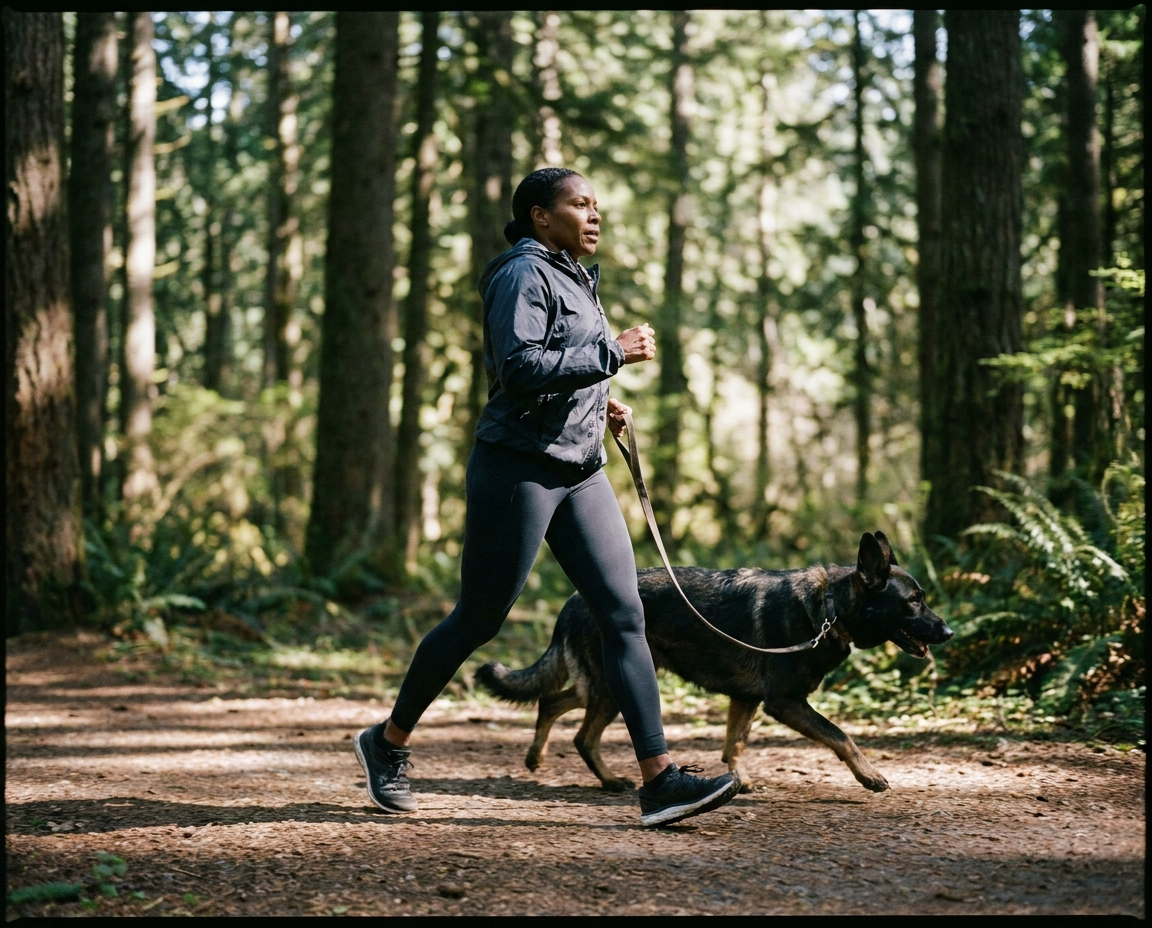
The dog itself has an enormous influence on the exercise you actually get, and this is something fitness researchers consistently note. High-energy breeds like Labrador Retrievers, Border Collies, Vizslas, and Weimaraners demand vigorous, sustained walking. Their owners move at a brisker pace, cover more ground, and are more likely to hit a genuine cardiovascular threshold on a typical walk. These are the dog owners who are actually getting a workout, and their data skews the positive statistics on dog walking and fitness. The situation is quite different for owners of small or scent-focused breeds – Beagles, Basset Hounds, Dachshunds, French Bulldogs – where the stop-sniff-investigate pattern is not an occasional interruption but the entire architecture of the walk. A Beagle does not walk a route; she processes it, one square inch at a time. For that owner, the 40-minute walk may contain only 20 minutes of actual forward movement, and much of that at a pace that barely elevates the heart rate.
Then there is the senior dog situation. Older dogs with joint stiffness or reduced mobility require slow, gentle walks with frequent stops and short distances. These walks are genuinely good for the dog – and the owner still benefits from the daily outdoor time, the light exposure, and the bond reinforcement. But calling it cardiovascular exercise would be a stretch, and it is worth being honest about that distinction. The point is not to dismiss these walks, which have real value across other dimensions, but to recognize that the exercise intensity of a dog walk is largely determined by the dog’s breed profile and life stage – not by your fitness intentions. You can have great intentions and a Dachshund, and still get a very gentle walk.
What Do You Actually Get From a Stop-Heavy Dog Walk?
Even the most leisurely, sniff-saturated dog walk does things for you that matter. Low-intensity movement reduces sedentary time, which has independent health benefits separate from its cardiovascular effect. Research consistently shows that breaking up prolonged sitting – even with brief light movement – improves blood sugar regulation, supports circulation, and reduces the stiffness and joint discomfort that comes from staying still too long. The daily regularity of dog walking is also a significant factor that pure exercise science tends to underweight. Whether you feel energetic or exhausted, your dog needs to go out. That enforced consistency means dog owners accumulate movement on days they would otherwise sit completely still. A 2023 meta-analysis in Frontiers in Public Health found that dog ownership was associated with meaningfully higher daily step counts across diverse populations, independent of intentional exercise. Over months and years, that consistent daily baseline adds up to a lot.
The outdoor light exposure matters more than most people realize. Daily time outside supports circadian rhythm regulation – a factor that affects not just energy and mood but sleep quality, which underpins virtually every aspect of physical and mental health. Even on overcast days, outdoor light is dramatically brighter than indoor light, and consistent morning outdoor exposure is one of the most well-documented tools for stabilizing sleep cycles and mood. There is also the mental health dimension, which researchers have now measured with reasonable precision. A 2021 study in the journal Animals found that dog walking reduced salivary cortisol and inhibited noradrenergic brain activity via GABA pathways – meaning even a slow walk with your dog produces measurable neurological stress relief (https://pmc.ncbi.nlm.nih.gov/articles/PMC8465204/). The endorphin release from daily movement, even light movement, adds to this effect. Chronic cortisol elevation is associated with systemic inflammation, disrupted sleep, and accelerated tissue aging – so anything that reliably brings it down, every single day, is doing quiet work on your behalf.
What Does Any of This Have to Do With Your Skin?

More than you might expect. The cortisol reduction that comes from daily dog walking is real and measurable – and cortisol is one of the primary drivers of inflammatory skin aging. Chronically elevated cortisol breaks down collagen, disrupts the skin barrier, promotes low-grade systemic inflammation, and accelerates visible signs of aging. A daily habit that reliably reduces it – even a slow sniff walk – is doing your skin a quiet favor over time. Better sleep, the downstream benefit of daily outdoor light exposure and consistent movement, is when the skin does its most significant repair work. The body surges growth hormone during deep sleep, which drives cellular turnover and collagen production. If your dog walks are improving your sleep (and the evidence suggests they do, for most people), your skin is benefiting in ways that no serum fully replicates.
There is also the vitamin D angle. Daily outdoor time supports vitamin D synthesis, which plays a role in skin barrier function and immune regulation. This does not mean skipping sun protection – SPF applies on dog walks just as everywhere else – but consistent outdoor exposure, even in filtered or indirect light, contributes to vitamin D levels over the long term in ways that indoor living simply does not. The broader point is that the skin benefits of dog walking come not from exercise intensity but from the combination of daily outdoor time, cortisol reduction, improved sleep quality, and the steady reduction in sedentary behavior. These are compounding effects. They operate on a quieter timescale than a gym session, but they show up in the skin over months and years of consistency.
Is This Enough for Women Over 50?
Here is where the honest answer diverges depending on life stage. For women in their 20s and 30s, a moderate-intensity dog walk twice a day with an active breed covers a meaningful portion of weekly exercise needs. For women over 50 – particularly post-menopause – the calculus changes significantly. The WHO recommends 150 minutes per week of moderate-intensity aerobic activity plus two days per week of muscle-strengthening exercise (https://www.who.int/news-room/fact-sheets/detail/physical-activity). Dog walking, even at a brisk pace, addresses part of the aerobic component. It addresses essentially none of the strength component. After 50, muscle mass declines at approximately 1% to 2% per year without active resistance training. Bone density, which peaks in the early 30s, decreases significantly without sufficient mechanical loading – and the gentle, low-impact nature of a stop-heavy dog walk does not provide enough stimulus to meaningfully support bone formation.
This is not a reason to stop the dog walks. It is a reason to be clear-eyed about what they are and what they are not. The daily nature walk with a dog has genuine value for women in this life stage – consistent low-impact movement supports joint health and helps manage arthritis stiffness, the daily outdoor ritual supports mood and circadian rhythm, and the social dimension of dog walking (conversations with neighbors, connections with other dog owners) has documented benefits for mental health and cognitive function as we age. These things matter deeply for how well we age, and they should not be dismissed. But they do not replace the resistance training and higher-intensity cardiovascular work that protects muscle, bone, and heart health after menopause. The dog walk is your daily foundation. It simply needs a supplement.
How Do You Make Dog Walking Actually Work for You?

The most practical approach is to stop trying to make the sniff walk into something it is not, and instead run two kinds of walks – or upgrade the intensity of one. The sniff walk is genuinely good for your dog. Research on canine enrichment consistently finds that olfactory investigation is one of the most mentally tiring and satisfying things a dog can do. A dog that gets adequate sniff time is calmer, less anxious, and more settled at home. Let her sniff. That is her walk. Your walk is a separate thing. If your schedule allows, many dog owners find success with a 10-to-15-minute sniff walk first, followed by a 20-minute brisk walk where you set the pace and the dog learns to match it. Most dogs, even scent-focused breeds, can learn to walk at a brisker pace on cue with consistent training. It simply requires repetition and patience.
If running two walks is not realistic, there are straightforward ways to extract more intensity from a single walk. Hills are the single most effective upgrade – even a gentle incline transforms the cardiovascular and muscular demand of a walk significantly. Varied terrain, like trails or grass, increases muscular engagement compared to flat pavement. Using the dog’s stop time actively – heel raises, squats, a balance hold on one leg while she investigates the hydrant – sounds slightly absurd but is genuinely effective and costs nothing. Wearables are useful here: checking your actual heart rate data during a typical dog walk often reveals something instructive. Many people discover that their walks are lighter than they assumed, and a few tweaks to pace or route make a measurable difference. A 150-pound adult walking at a leisurely pace burns roughly 100 to 150 calories in 30 minutes – a baseline, not an achievement, but the floor from which to build.
What Dog Walking Cannot Do on Its Own
No matter how you optimize your dog walks, there are two fitness needs they cannot reliably meet. The first is meaningful cardiovascular conditioning – the kind that improves VO2 max and reduces long-term cardiovascular disease risk – which requires sustained activity at true moderate-to-vigorous intensity for extended periods. Two or three weekly sessions of brisk walking without a dog, cycling, swimming, or any activity that reliably elevates your heart rate for 20 or more continuous minutes will cover what stop-heavy dog walks leave undone. The second is muscle and bone maintenance, which requires resistance. Bodyweight exercises, resistance bands, free weights, or any structured strength training done twice a week provides what no amount of walking can replicate. Together with your daily dog walks, these two additions create a genuinely robust movement practice – one that covers cardiovascular conditioning, muscle and bone preservation, and the daily outdoor baseline that supports sleep, mood, and skin health.
There is a temptation – understandable, honestly – to let the dog walk become the entire exercise program, particularly when life is full and gym time feels like an impossible ask. The dog walk is consistent, it happens outdoors, it involves an animal you love, and it provides real benefits. It feels like enough. For purely sedentary health – reducing the risks that come from sitting all day – it largely is. But if your goals include cardiovascular fitness, muscle preservation, bone density, and the kind of physical resilience that pays off in your 60s, 70s, and 80s, then the dog walk is the beginning of your movement practice, not the whole of it.
FAQs
How can I tell if my dog walk is actually moderate-intensity exercise?
The most reliable method is a heart rate monitor or smartwatch. Moderate intensity means your heart rate is at 50% to 70% of your estimated maximum (roughly 220 minus your age). You should feel noticeably warm, breathe harder than usual, and be able to speak in sentences but not comfortably sing. If you are chatting easily and your heart rate data sits in the low 90s for a woman in her 50s, you are likely in the light-activity zone – which still counts, but is not a cardiovascular workout.
What is the minimum dog walk pace to count as real exercise?
The Centers for Disease Control defines brisk walking as approximately 3 miles per hour – covering a mile in about 20 minutes. At that pace, most adults are working at the low end of moderate intensity. A useful target is 20 or more minutes of actual forward movement at brisk pace within the walk, regardless of total walk duration. Frequent stops reduce this significantly, so tracking your moving time separately from your total walk time gives a more honest picture.
Should I let my dog sniff as much as she wants, or keep moving?
Both – ideally on separate walks, or in sequence. Sniffing is cognitively enriching for dogs, and research on canine behavior consistently recommends allowing adequate sniff time for mental health and emotional regulation. A dog that gets regular sniff time is calmer and more satisfied. But the sniff walk is your dog’s enrichment, not your cardio session. Consider a short sniff-first segment followed by a brisk walking segment where you set the pace – this meets both your needs without conflict, and most dogs adapt readily.
What kind of additional exercise should I add if my dog walks are not enough?
Two sessions per week of resistance training – bodyweight, resistance bands, or free weights – address the muscle and bone maintenance that walking cannot provide. Two to three sessions of sustained moderate cardio per week cover the cardiovascular conditioning gap. Neither needs to be lengthy: 20 to 30 minutes of strength work twice a week, plus two brisk 30-minute walks or swims, covers the essentials. Consistency matters far more than intensity for most people at this life stage.
Does walking a dog burn enough calories to help with weight management?
For most people, the calorie burn from dog walking alone – roughly 100 to 150 calories for 30 minutes of leisurely walking – is not a primary driver of weight management. It contributes to overall daily energy expenditure and supports the metabolic benefits of regular movement, but relying on it as the central weight management strategy is likely to produce frustration. The more significant benefit is cumulative: dog owners tend to move more total hours per week than non-dog owners, and that sustained daily movement has real metabolic value over months and years.
Your dog is not a personal trainer. She has no interest in your VO2 max and zero concern for your heart rate zones. But she is getting you outside every single day, in the light and fresh air, moving your body and quieting your cortisol and reminding you that the world has texture and smell and things worth investigating at a slow pace. That is more than most gym memberships reliably deliver. Add the resistance training, add a brisk solo walk or two each week – but never, ever skip the dog walk. It is the daily habit that makes everything else possible.
Related Posts