May
If you click on links we provide, we may receive compensation.
Nearly 80 percent of adults report experiencing physical symptoms caused by stress on a regular basis, according to the American Psychological Association. That number has barely budged in years, and the daily rituals people reach for in response – a warm bath, a quiet room, a few drops of something fragrant – have not changed much either. Essential oils have been used to promote calm since ancient Egypt and Greece, and modern science has started catching up to what practitioners have known for centuries. A 2024 narrative review published in a peer-reviewed journal found consistent evidence that certain aromatic compounds modulate emotional responses and promote measurable states of relaxation through interaction with the limbic system – the brain’s emotional processing center. This is not wishful thinking or placebo territory. The olfactory system has a direct anatomical connection to the amygdala, which governs fear and stress responses, and inhalation of specific compounds activates it within seconds. For anyone navigating the particular pressures of midlife and beyond – hormonal changes, sleep disruption, a body that holds tension differently than it once did – understanding which oils do what, and how to use them, is genuinely useful information.
How do essential oils actually affect stress in the body?
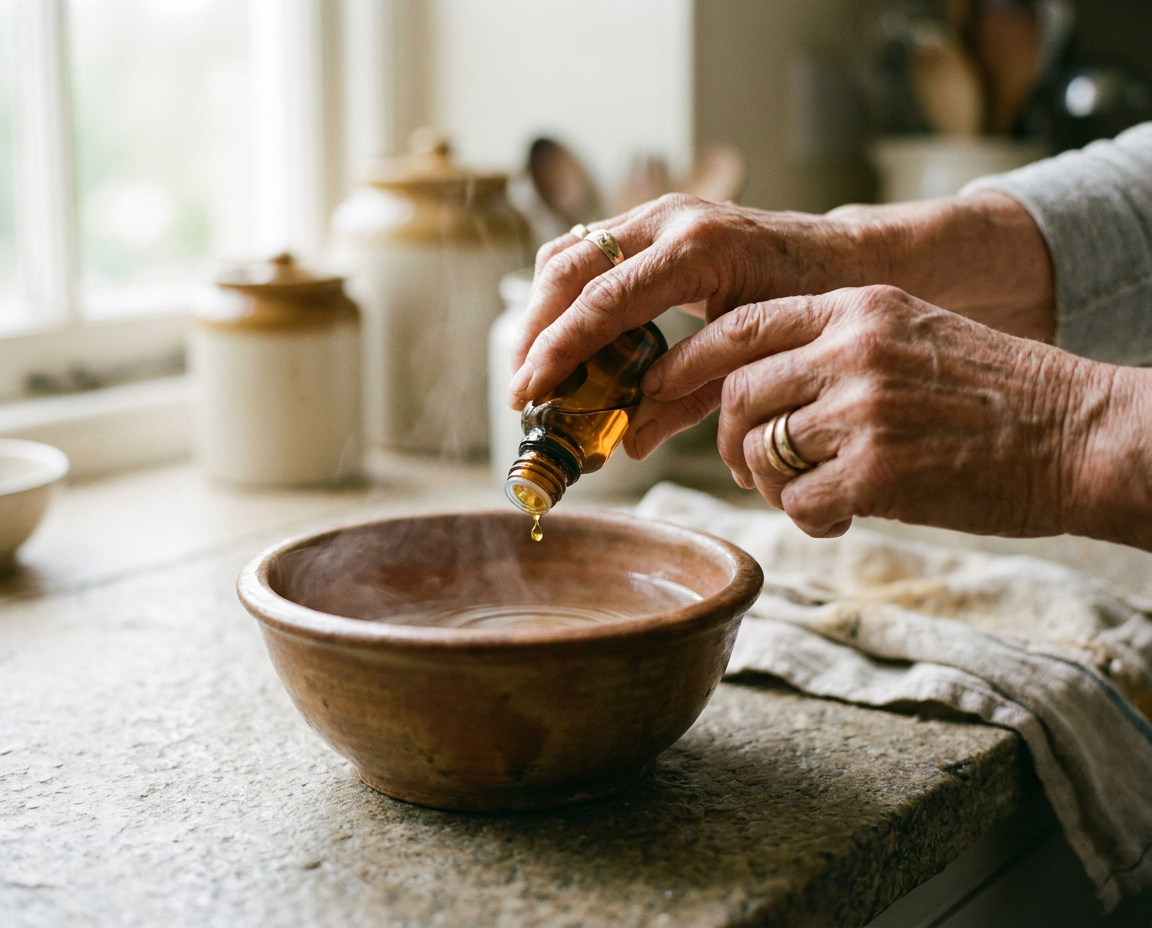
The mechanism is more direct than most people realize. When you inhale an aromatic compound, the scent molecules travel through the nasal passage and bind to olfactory receptors, which immediately send signals to the limbic system. That system includes the amygdala, the hippocampus, and the hypothalamus – structures that regulate fear, memory, and the autonomic nervous system. The result is a rapid physiological response: heart rate can slow, cortisol output can decrease, and the parasympathetic nervous system – the rest-and-digest counterpart to fight-or-flight – is activated. Studies measuring salivary cortisol, a reliable marker of stress, have found statistically significant reductions following aromatherapy interventions with several specific oils. The effect is not identical across every oil or every person, but the pathway is real and well-documented.
Topical application works through a different route. When an essential oil is diluted in a carrier oil and applied to the skin, its constituent compounds absorb transdermally and enter the bloodstream, where they can affect systems throughout the body. This is why a lavender-infused massage before bed produces a different – and in some studies, more sustained – effect than diffusing the same oil in a room. Most people use both approaches interchangeably, which is fine, but understanding the distinction helps you match method to intention. Inhalation works quickly. Topical application works more slowly but can last longer. And the combination of scent and touch – as in a self-massage routine – activates multiple relaxation pathways at once, which is part of why ritualized use of essential oils tends to outperform casual exposure in clinical settings.
Which essential oils have the strongest evidence for relaxation?
Lavender is the most studied essential oil in the world, and its reputation is backed by serious research. A systematic review that analyzed 76 clinical studies involving 6,539 patients found consistent evidence that lavender aromatherapy reduces anxiety across a wide range of populations and settings – including surgical patients, intensive care unit residents, and older adults living independently. A separate randomized controlled trial specifically examining chamomile and lavender inhalation in older community-dwelling adults found significant improvements in depression, anxiety, and stress scores after just four weeks of regular use. The active compounds in lavender – primarily linalool and linalyl acetate – have been shown to interact with GABA receptors in the brain, the same receptors targeted by anti-anxiety medications, which offers a plausible biochemical explanation for the effect. That said, lavender works at much lower intensities than pharmaceutical interventions, and it is not a substitute for treatment when anxiety is clinical in nature.
Bergamot is the second oil with a particularly strong evidence base. It is extracted from the rind of a citrus fruit grown primarily in southern Italy, and its scent is the distinctive note in Earl Grey tea. A 2022 clinical trial found that inhaling bergamot oil before sleep significantly improved measures of depression, anxiety, and stress in participants compared to a control group. Research suggests it reduces cortisol levels through the same olfactory-limbic pathway as lavender, though its specific active compounds – primarily limonene and linalool – act slightly differently. Bergamot has an uplifting quality that lavender lacks, making it a better choice for stress that manifests as low mood or mental fog rather than agitation. Many aromatherapists blend the two for precisely this reason: lavender brings the calm, bergamot lifts the heaviness.
Chamomile – specifically Roman chamomile rather than German chamomile – rounds out the three oils with the most consistent evidence for emotional regulation. Its profile skews more deeply sedative than lavender or bergamot, with research showing particular effectiveness for sleep-related stress and anxiety that presents at night. A study published in Frontiers in Pharmacology noted that chamomile’s primary aromatic compound, bisabolol, has demonstrated anxiolytic activity in animal models, and several human trials have corroborated the sedative direction of the effect. For people dealing with the hypervigilant wakeful state that often accompanies chronic stress – the lying-awake-at-midnight variety – chamomile used in an evening diffusion or bath ritual has meaningful supporting evidence. Its scent is softer and more apple-like than lavender, which some people find more approachable.
What about frankincense, ylang ylang, and the other oils people reach for?
Frankincense has a long ceremonial history in traditions from ancient Egypt to the Catholic Church, and its reputation as a grounding, meditative oil is not without scientific support. Research has shown that inhaling frankincense can reduce heart rate and blood pressure – measurable indicators of the body’s stress response – though human trials remain fewer in number than the lavender research. The active compound incensole acetate has shown activity in the central nervous system in animal studies, and frankincense is consistently associated with what researchers describe as a psychoactive warmth – a sense of being grounded or centered that users report distinctly from other oils. It is particularly worth considering for stress that has a meditative or spiritual dimension, or for anyone who finds bright citrus or floral scents too activating.
Ylang ylang has a rich, heady floral quality – intensely sweet, almost tropical – and it has attracted scientific interest because of its cardiovascular effects. A study published in the Journal of Exercise Rehabilitation found that ylang ylang aromatherapy significantly reduced both stress levels and blood pressure in healthy adults, with effects measurable after a single 20-minute exposure. The sedative properties are genuine, though its intensity means it can feel overwhelming at high concentrations – a little goes a long way, and blending it with bergamot or lavender smooths its edges considerably. For people who respond well to floral scents, ylang ylang used sparingly in a diffuser blend or a diluted bath oil represents one of the faster-acting options in the aromatherapy toolkit.
Clary sage and sandalwood are two additional oils that regularly appear in stress relief contexts and have earned their place. Clary sage has been studied specifically in the context of hormonal stress – a small but notable body of research suggests it can reduce cortisol in women experiencing menopausal symptoms, which makes it particularly relevant for the demographic most likely reading this. Sandalwood has a slow, woody warmth that supports meditation and deep breathing practices, and some research suggests its active compound alpha-santalol has mild anxiolytic effects. Neither has the same volume of evidence as lavender or bergamot, but both have plausible mechanisms and strong real-world use histories. They are worth experimenting with, especially if the more common oils feel too familiar or have stopped producing a noticeable response.
What does stress actually do to aging skin, and can these oils help?
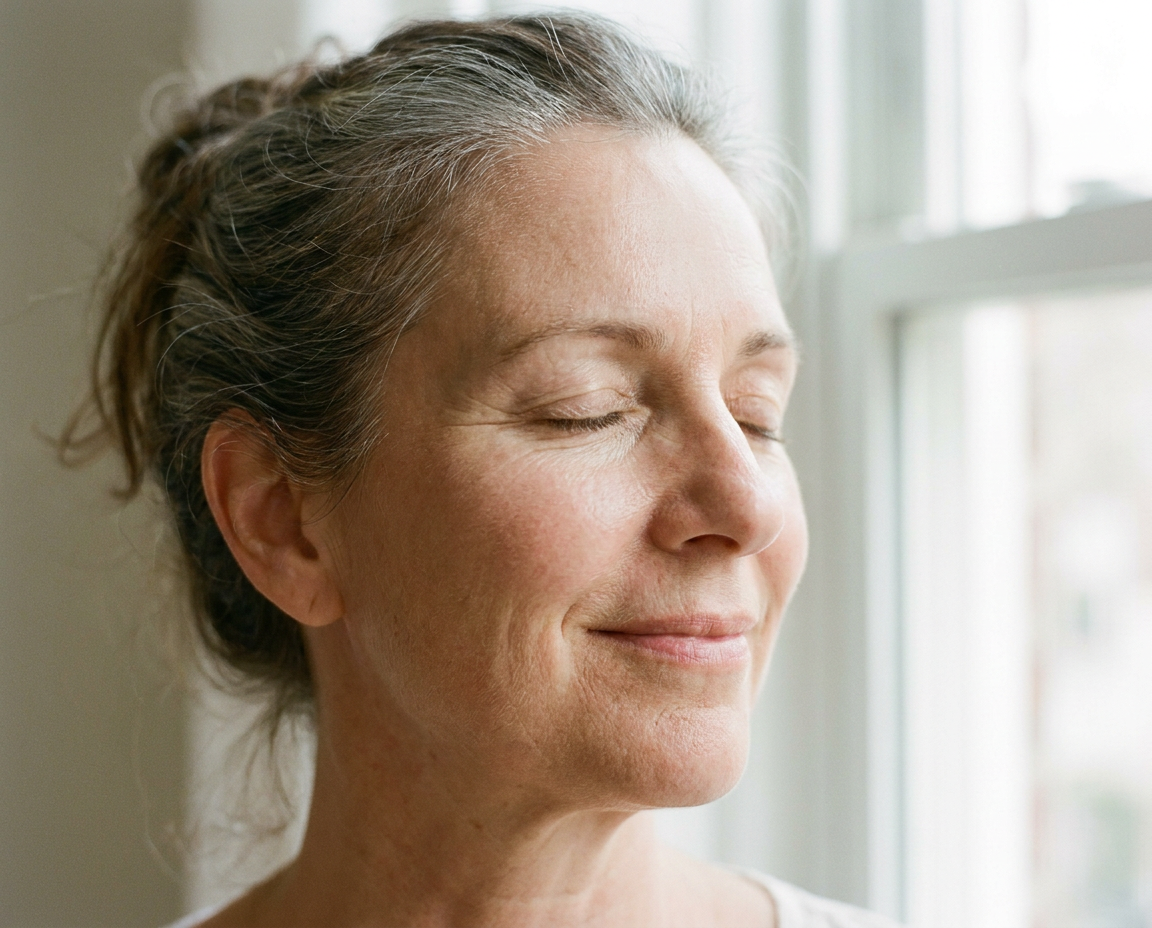
The connection between chronic stress and skin aging is direct and significant. Elevated cortisol – the primary stress hormone – breaks down collagen and elastin, the structural proteins that keep skin firm and resilient. It also compromises the skin barrier, increasing transepidermal water loss and making the skin more reactive to environmental irritants. Over time, chronically stressed skin shows more pronounced lines, more dullness, and slower recovery from damage. This is not a metaphor or a marketing claim – the biochemistry is well-established, and dermatologists increasingly recognize psychological stress management as a legitimate component of skin health, particularly in older adults whose skin is already producing collagen at a slower rate and whose barrier is thinner.
Reducing chronic stress through any effective method – including aromatherapy – therefore has real downstream benefits for skin. Lower cortisol means less collagen breakdown. Better sleep means more overnight repair. A calmer nervous system means less inflammation, which is one of the primary drivers of accelerated skin aging. Some essential oils offer a more direct benefit on top of this systemic effect: lavender has demonstrated anti-inflammatory activity when applied topically in diluted form, and frankincense has been studied for its potential to support skin cell turnover. These topical effects are secondary to the aromatherapy benefits, and essential oils should never be applied undiluted to the skin. But for someone building a self-care ritual that addresses both stress and skin, a diluted blend of lavender and frankincense in a carrier oil like jojoba or rosehip – applied as part of an evening face massage – does double duty.
Mature skin in particular benefits from the ritual dimension of essential oil use, beyond any specific compound effect. The act of slowing down, applying something intentionally, breathing deliberately – these behaviors activate the parasympathetic nervous system through multiple channels simultaneously. Touch, scent, and intention each contribute independently to the relaxation response, which is why a five-minute evening face massage with a well-chosen oil blend can feel meaningfully different from simply sitting quietly in a room with a diffuser. For women in their fifties, sixties, and beyond, building rituals that address the body’s stress response with this kind of intentionality is not indulgence – it is genuinely good skin strategy.
How do you use essential oils safely and effectively?
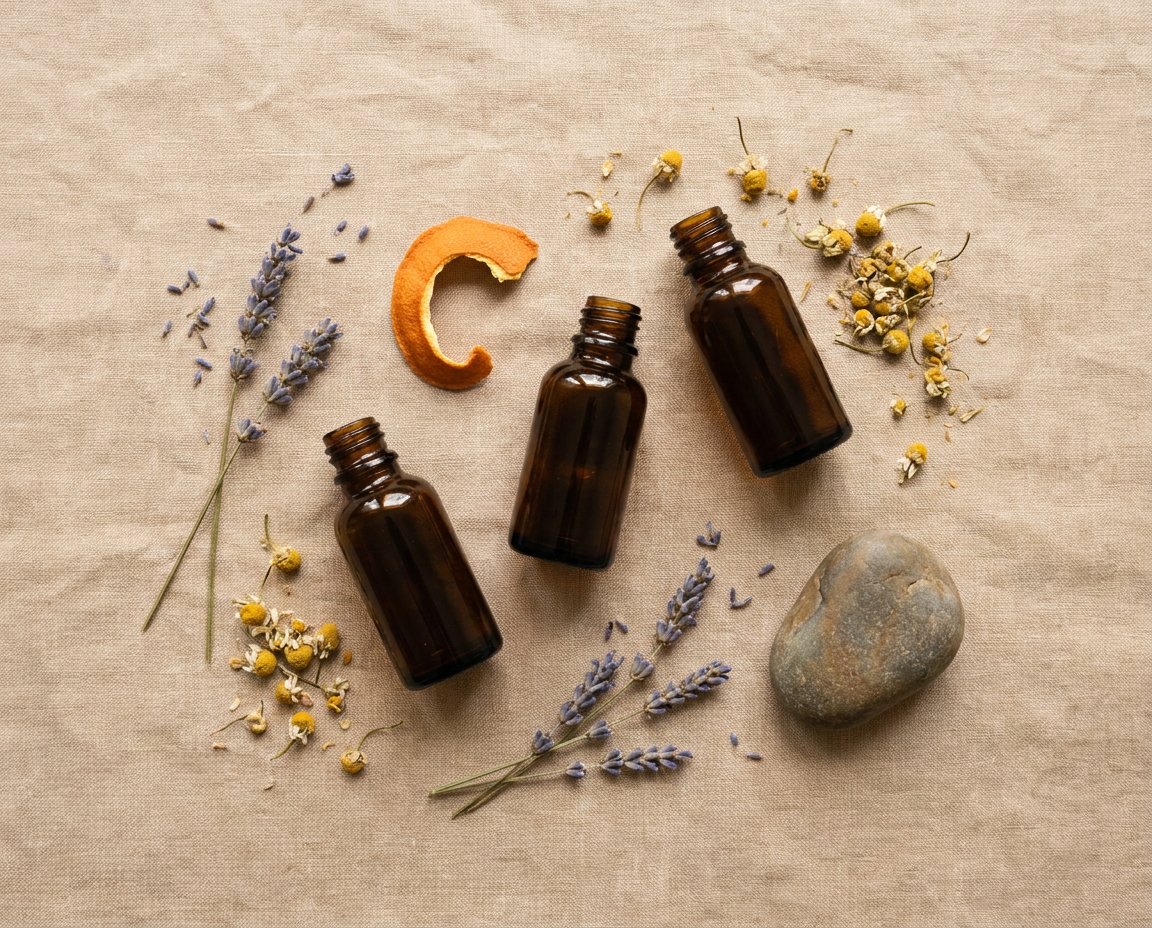
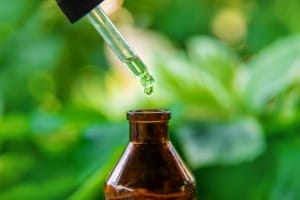
The first and most important rule is dilution. Essential oils are concentrated plant extracts – typically 50 to 100 times more potent than the plant material they come from – and applying them undiluted to skin causes irritation, sensitization, and sometimes chemical burns. The standard dilution for face or body use is 1 to 2 percent: that is 6 to 12 drops of essential oil per ounce of carrier oil. Good carrier oils for mature skin include jojoba, which closely mimics the skin’s own sebum; rosehip, which contains vitamin A and essential fatty acids; and squalane, which is lightweight and deeply hydrating. For diffusion, 3 to 5 drops in a water-based ultrasonic diffuser is sufficient for a standard room. More is not better – excessive concentration can cause headaches or irritation.
Quality matters enormously, and it is one of the real problems with the essential oil market. The FDA does not regulate essential oil purity, and adulteration – diluting expensive oils with cheaper synthetics or carrier oils – is widespread at the consumer level. A few indicators of quality: the oil should be sold in dark glass bottles (UV light degrades the compounds), the label should list the Latin botanical name and country of origin, and the price should be consistent with what it actually costs to produce the plant material. Lavender and bergamot are relatively affordable. Rose otto and sandalwood are legitimately expensive – if they are cheap, they are probably not pure. Buying from brands that provide GC/MS testing results (gas chromatography/mass spectrometry) is the most reliable way to verify purity, and several reputable companies make these available online.
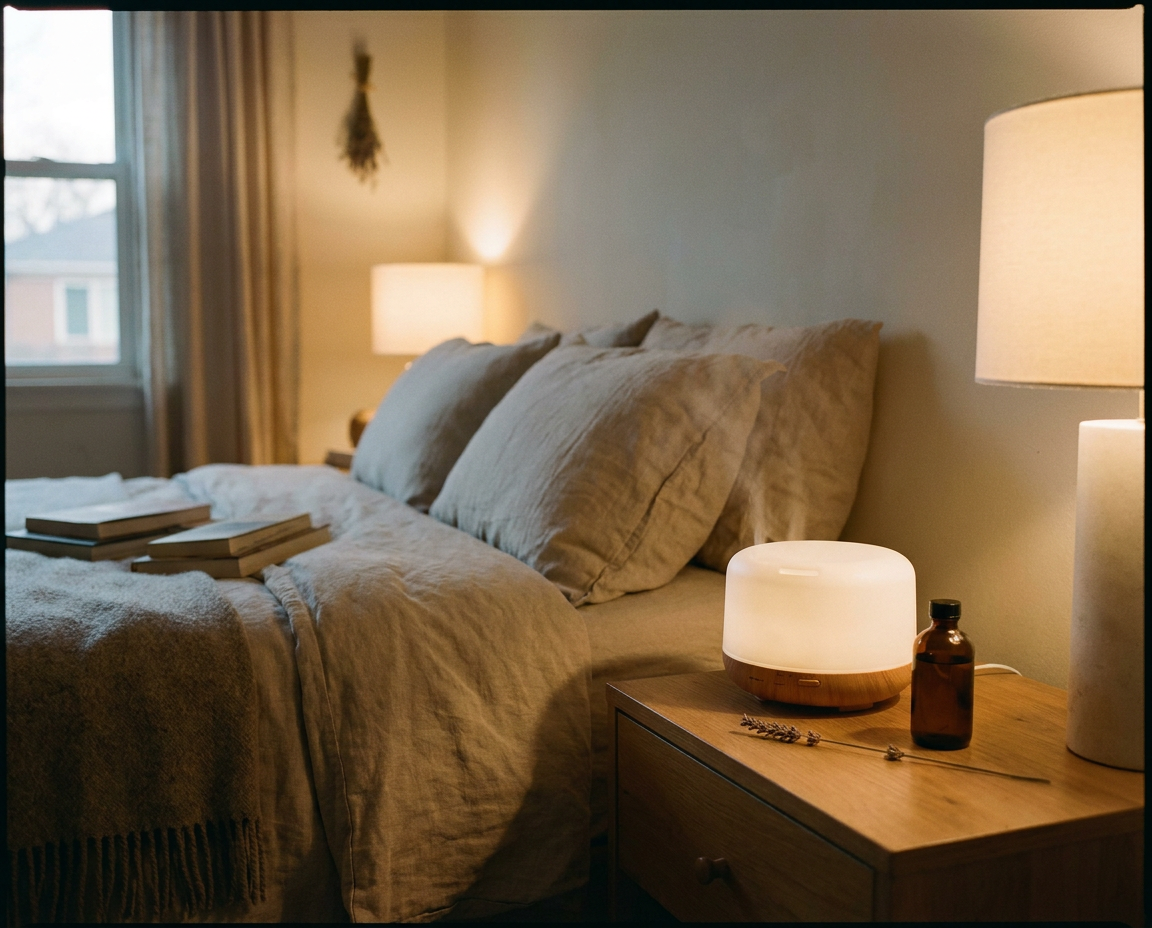
For diffusion as a stress relief practice, timing matters. Evening diffusion – starting about an hour before bed – aligns with the body’s natural wind-down process and supports the drop in cortisol that should accompany the transition toward sleep. Run the diffuser for 30 to 60 minutes rather than continuously; olfactory fatigue sets in quickly, and continuous diffusion provides diminishing returns while increasing the chance of headache. A simple evening blend of three drops lavender, two drops bergamot, and one drop chamomile covers most of the evidence-backed bases and smells genuinely pleasant. For daytime stress, bergamot or a bergamot-frankincense blend diffused during focused work supports concentration without the sedation that heavier evening blends can produce.
Frequently Asked Questions
Are essential oils safe to use every day?
For most people, daily use is fine as long as you are rotating oils and not applying the same one topically every day. The main risks with daily use are sensitization – where repeated exposure to the same compound causes the immune system to mount a reaction – and olfactory fatigue, where you stop noticing the effect. Rotating between two or three oils or blends addresses both. If you are pregnant, nursing, or taking medications that affect the central nervous system, check with a healthcare provider before using essential oils regularly, as some compounds have documented interactions.
Can essential oils replace anxiety medication?
No, and it would be a mistake to try to use them that way. The evidence for essential oils is real but modest – it supports their role as a complementary practice that reduces everyday stress and supports relaxation, not as a treatment for clinical anxiety disorders. If your anxiety is significantly affecting your quality of life, please talk to a doctor or mental health professional. Essential oils can be a useful part of a broader self-care approach, but they are not a substitute for clinical care when that care is needed.
Which essential oil is best for sleep?
Lavender has the most clinical evidence specifically for sleep improvement. A review of 30 studies found that aromatherapy improved sleep quality by reducing stress, anxiety, and fatigue in participants. Roman chamomile is a strong second option, particularly for people whose sleep disruption is driven by a racing mind. Cedarwood, which contains cedrol – a compound with demonstrated sedative properties in animal models – is worth trying if lavender has become too familiar. A combination of lavender and cedarwood diffused in the bedroom for an hour before sleep is one of the most practically effective approaches the research supports.
Can I apply essential oils directly to my face?
Never undiluted. Essential oils applied directly to skin – especially facial skin, which is thinner than body skin – cause irritation and can trigger sensitization that makes you reactive to the oil permanently. Always dilute to 1 percent or less for the face (about 6 drops per ounce of carrier oil). Lavender and frankincense are the most commonly used oils in facial blends; both have evidence for anti-inflammatory benefit when used correctly. Do a patch test on the inner arm before applying anything new to your face.
Does the brand of essential oil matter?
Yes, significantly. The essential oil market is poorly regulated and adulteration is common. Look for brands that provide GC/MS (gas chromatography/mass spectrometry) test results for each batch, list the Latin botanical name and country of origin on the label, and sell in dark glass bottles. Price is also a signal – if rose otto or sandalwood is priced the same as lavender, the quality is almost certainly not what it claims to be. Reputable suppliers include Rocky Mountain Oils, Plant Therapy, Eden Botanicals, and Tisserand, among others – though always check for current batch testing regardless of brand reputation.
How long does it take for essential oils to produce a noticeable effect?
For inhalation, the effect can be felt within minutes – the olfactory-limbic connection is fast. A measurable shift in heart rate variability or mood has been documented in studies within 10 to 20 minutes of diffuser exposure. For sustained benefit – reduced baseline anxiety, improved sleep quality – consistent use over several weeks produces more reliable results than occasional use. Think of it the way you would a mindfulness practice: a single session is pleasant, but the structural benefit accumulates with regularity.
The appeal of essential oils is partly that they ask very little of you. You do not need a treatment room or a practitioner – a diffuser on a nightstand, a diluted roller applied to the wrists, a few slow breaths over a bottle of something that smells like calm. For anyone who has been carrying stress in their body for years, these small rituals represent a low-barrier entry point into the broader practice of intentional recovery. The science does not promise miracles. It does suggest, across a meaningful body of evidence, that the right aromatic compounds delivered consistently can genuinely lower the body’s stress response – and that for skin, for sleep, and for the quality of ordinary evenings, that is worth taking seriously.
Related Posts