Apr
If you click on links we provide, we may receive compensation.
Stress is not just a feeling. It is a biological event with measurable consequences for the skin. When the body perceives a threat – whether real or psychological – it releases cortisol and adrenaline, hormones that redirect resources toward immediate survival. Heart rate increases. Blood flow shifts. And the skin, sitting at the bottom of that triage list, receives less support. This is a useful short-term response. As a chronic state, it is quietly destructive. Meditation, practiced consistently, is one of the few evidence-backed tools for interrupting that cycle.
The research on meditation and stress physiology is now substantial. A 2013 meta-analysis published in JAMA Internal Medicine reviewed 47 clinical trials and found that mindfulness meditation programs showed meaningful improvements in anxiety, depression, and pain. What happens in the skin downstream of those improvements is less studied but increasingly understood. Cortisol suppresses immune function, increases inflammation, slows wound healing, and disrupts the skin barrier. Anything that reliably lowers cortisol is relevant to skin health.

How does stress affect the skin physically?
The connection between psychological stress and skin condition is called the brain-skin axis. It refers to the bidirectional communication between the nervous system and the skin through shared hormones, neurotransmitters, and immune messengers. The skin is not a passive barrier. It has its own nervous network, its own immune cells, and its own hormonal receptors. When stress hormones flood the body, skin cells respond directly.
Cortisol, the primary stress hormone, does several things that are bad for skin. It stimulates the sebaceous glands to produce more oil, which is why many people break out during stressful periods. It breaks down collagen by activating enzymes called matrix metalloproteinases. It impairs the skin barrier by reducing ceramide production, making skin more permeable and more reactive. And it slows the rate at which the skin repairs itself after damage. Over time, chronic stress literally ages the skin at an accelerated rate.
Inflammatory skin conditions are particularly sensitive to psychological stress. Clinical data shows that psoriasis flares, eczema exacerbations, and rosacea episodes all correlate with periods of heightened psychological stress. The mechanism involves stress-triggered release of neuropeptides like substance P, which activate mast cells in the skin and trigger inflammatory cascades. This is not psychosomatic in the dismissive sense. It is real biology. Meditation interrupts this signaling pathway by lowering the baseline activation of the stress response.
What does meditation actually do to cortisol?
Several studies have measured cortisol levels before and after meditation programs. A 2010 study in Health Psychology found that mindfulness practice over eight weeks produced measurable reductions in cortisol awakening response – the surge of cortisol that happens in the first 30 to 45 minutes after waking, which is a key marker of chronic stress load. Reducing this morning cortisol spike has downstream benefits throughout the day, including less oil gland stimulation, less collagen degradation, and improved barrier function.
Meditation also affects telomere length, which is a biological marker of cellular aging. Telomeres are the protective caps at the ends of chromosomes, and they shorten with stress, poor sleep, and inflammation. Shorter telomeres are associated with accelerated aging at the cellular level. Preliminary research from the University of California, Davis, found that experienced meditators had significantly higher telomerase activity – the enzyme that maintains telomere length – compared to non-meditators. The implication for skin aging is not yet proven in direct trials, but the biological logic is sound.

Which meditation practices are most relevant for skin health?
Mindfulness-based stress reduction (MBSR) is the best-studied formal meditation program. Developed by Jon Kabat-Zinn at the University of Massachusetts Medical School, MBSR involves eight weeks of structured practice including body scan meditation, sitting meditation, and gentle movement. It has been tested in clinical populations with psoriasis, eczema, and other inflammatory conditions. Studies show that MBSR programs accelerate skin clearing in psoriasis patients receiving UV light therapy, apparently by reducing the inflammatory response.
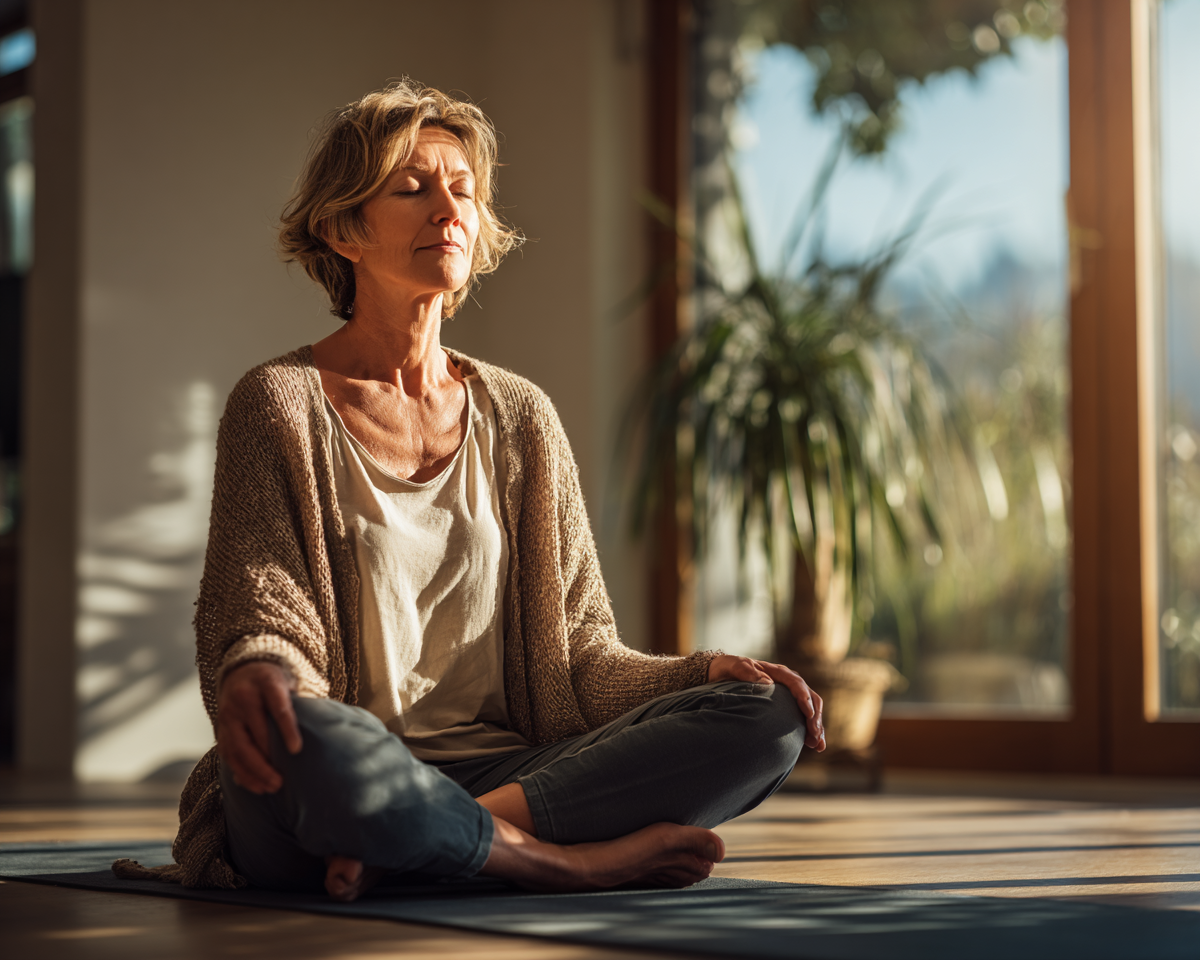
Breath-focused meditation is more accessible and requires no formal training or program. The practice involves focusing attention on the breath – its rhythm, depth, and physical sensation – and gently redirecting attention back when the mind wanders. Even brief practice of five to ten minutes can activate the parasympathetic nervous system, which counters the sympathetic stress response. Heart rate slows. Blood pressure drops. Muscle tension releases. And cortisol output begins to decline. These physiological changes create better conditions for skin repair and barrier maintenance.
Advertisement
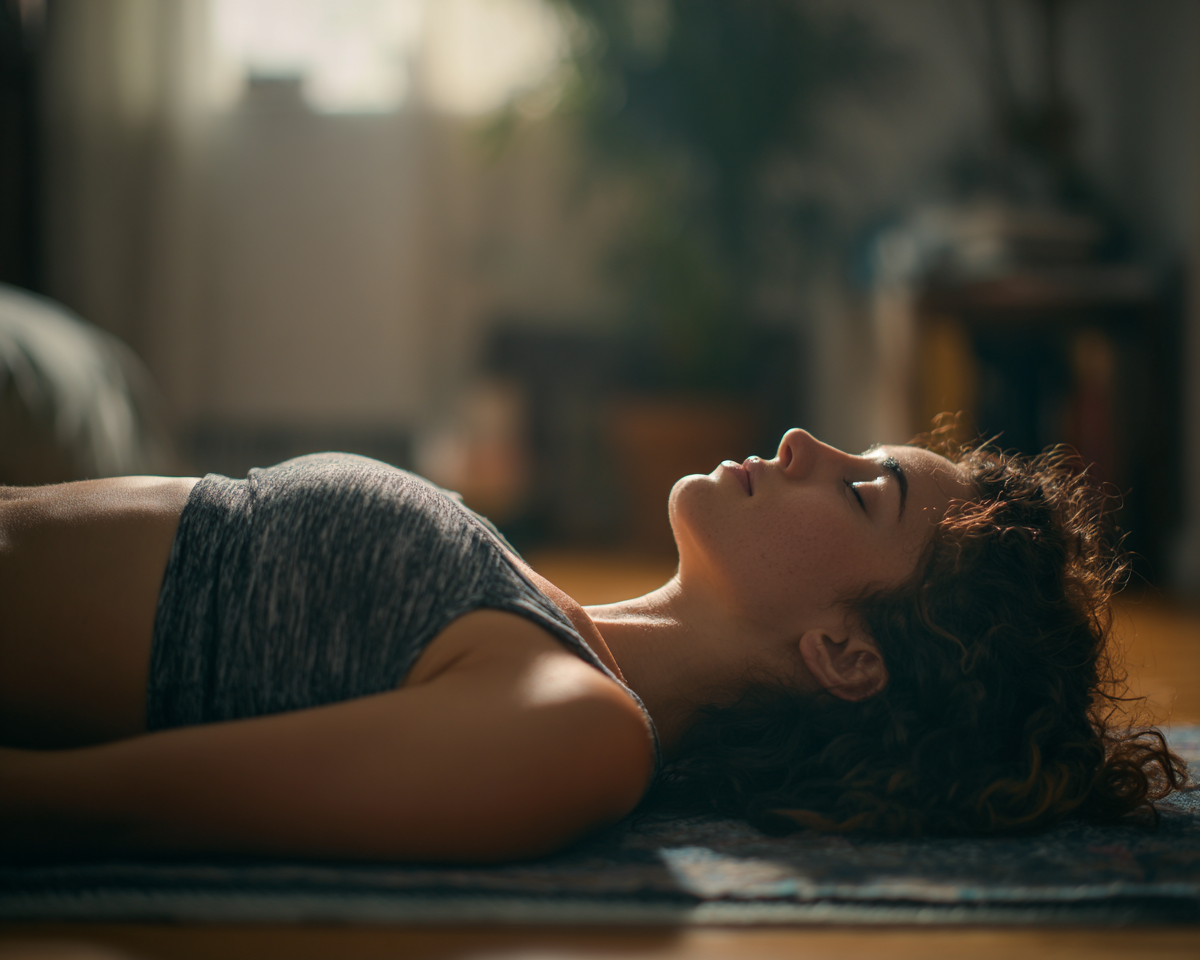
Yoga nidra and progressive muscle relaxation are two related practices with evidence for reducing inflammatory markers. They involve systematic relaxation of different body regions while maintaining a state of conscious awareness. For people who find sitting meditation difficult, these practices can produce similar physiological benefits in a different format. The consistency of practice matters more than the specific technique. A ten-minute routine done daily produces more benefit than an hour done once a week.
What about sleep – how does meditation help there?
Sleep is where the skin does its heaviest repair work. Growth hormone, which peaks during slow-wave sleep, drives cell renewal and collagen synthesis. Blood flow to the skin increases during sleep, delivering nutrients and removing metabolic waste. The skin barrier actively restores itself during nighttime hours. When sleep is disrupted or shortened, all of this is compromised. Chronic poor sleep produces higher cortisol, lower growth hormone output, and a measurable decline in skin hydration and barrier function.
Meditation is one of the most effective non-pharmacological tools for improving sleep quality. Research published in JAMA Internal Medicine found that mindfulness meditation significantly improved sleep quality in older adults with moderate sleep difficulties, outperforming sleep hygiene education on several measures. Better sleep means more effective nocturnal skin repair, which is why investing in a pre-sleep meditation practice is arguably more skin-relevant than many topical products marketed for overnight use.
Can meditation reduce the appearance of aging over time?
The direct evidence for meditation producing visible anti-aging changes in the skin is still limited. But the mechanisms are credible and the indirect evidence is accumulating. Lower cortisol reduces collagen degradation. Better sleep improves repair processes. Reduced inflammation protects the extracellular matrix. And regular meditators tend to make better overall health choices – including more consistent sunscreen use, better diet, and less alcohol and tobacco – all of which have direct skin consequences.
For people with inflammatory skin conditions, the case for meditation is stronger because stress is a documented trigger for flares. For everyone else, the argument is more about prevention and supporting skin function from within. Combined with a consistent topical routine, sunscreen, and good nutrition, a regular meditation practice addresses skin aging from an angle that no serum can reach. It is not the most marketable skincare advice. But it is among the most biologically sound.
How do you start a meditation practice?
The barrier to entry is much lower than most people expect. Five minutes per day is enough to start building the neural pathways associated with parasympathetic activation. Apps like Insight Timer, Calm, and Headspace offer guided sessions at no or low cost. The most effective approach for beginners is guided breath awareness – simply following the breath in and out while a voice provides gentle direction.
Consistency matters more than duration, especially early on. Practicing at the same time each day – usually morning before the day’s demands accumulate or evening before sleep – helps establish the habit. Expect the mind to wander. That is not failure. The act of noticing the wandering and returning to the breath is the practice itself. Over weeks, the nervous system becomes more practiced at shifting into parasympathetic mode, and the physical benefits – including improved sleep, lower cortisol, and reduced inflammatory activity – follow.
Frequently Asked Questions
Does meditation immediately reduce skin inflammation?
Not immediately, but consistent practice over weeks produces measurable reductions in inflammatory markers. Stress-triggered flares of conditions like eczema and psoriasis respond over a period of regular practice.
How long before meditation affects skin appearance?
Given that skin cell turnover takes four to six weeks and stress effects on skin are cumulative, expect to see differences after two to three months of daily practice. Sleep improvements may come faster and are often the first visible change.
Can meditation replace skincare products?
No. Meditation addresses internal factors – cortisol, inflammation, sleep quality – while topical products address the skin surface directly. Both approaches have roles. Neither replaces the other.
Is there a best time to meditate for skin benefits?
Evening meditation before sleep has the most direct pathway to skin benefit by improving sleep quality and reducing cortisol before the night repair cycle. Morning meditation sets cortisol patterns for the day, which also matters.
Can chronic skin conditions improve with meditation alone?
For stress-sensitive conditions like psoriasis, rosacea, and eczema, meditation can meaningfully reduce flare frequency and severity when practiced consistently. It works best as part of a broader management plan rather than as a standalone treatment.
Related Posts